
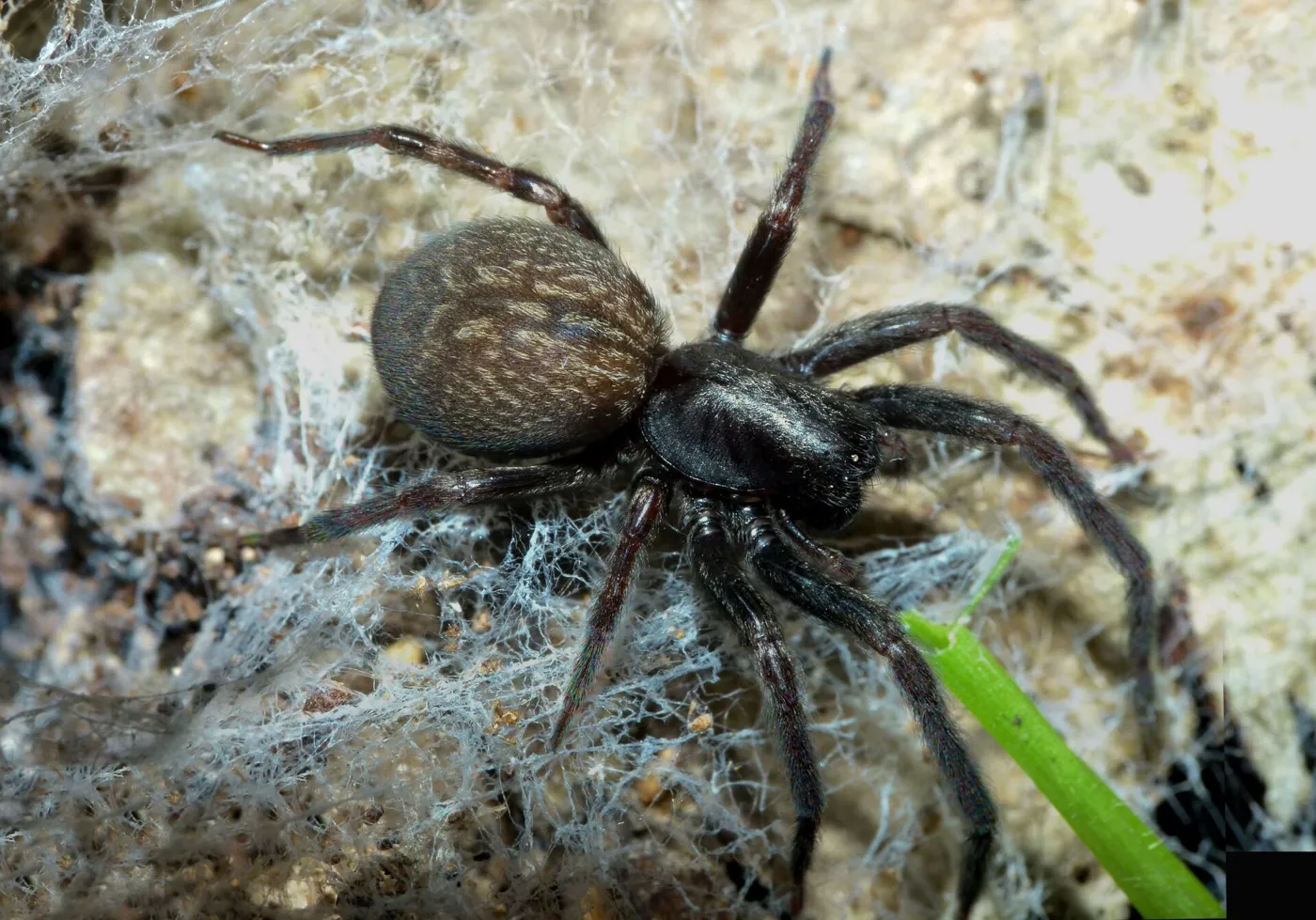
The black house spider (Badumna insignis) is a dark, sturdy spider with a charcoal abdomen and grey hairs on the front of its body. In Melbourne it lives in window frames, wall cracks and under eaves, behind a lacy, untidy web that leads to a funnel-shaped hole. It is timid. Bites are uncommon and painful, but not usually dangerous.
Is it this?
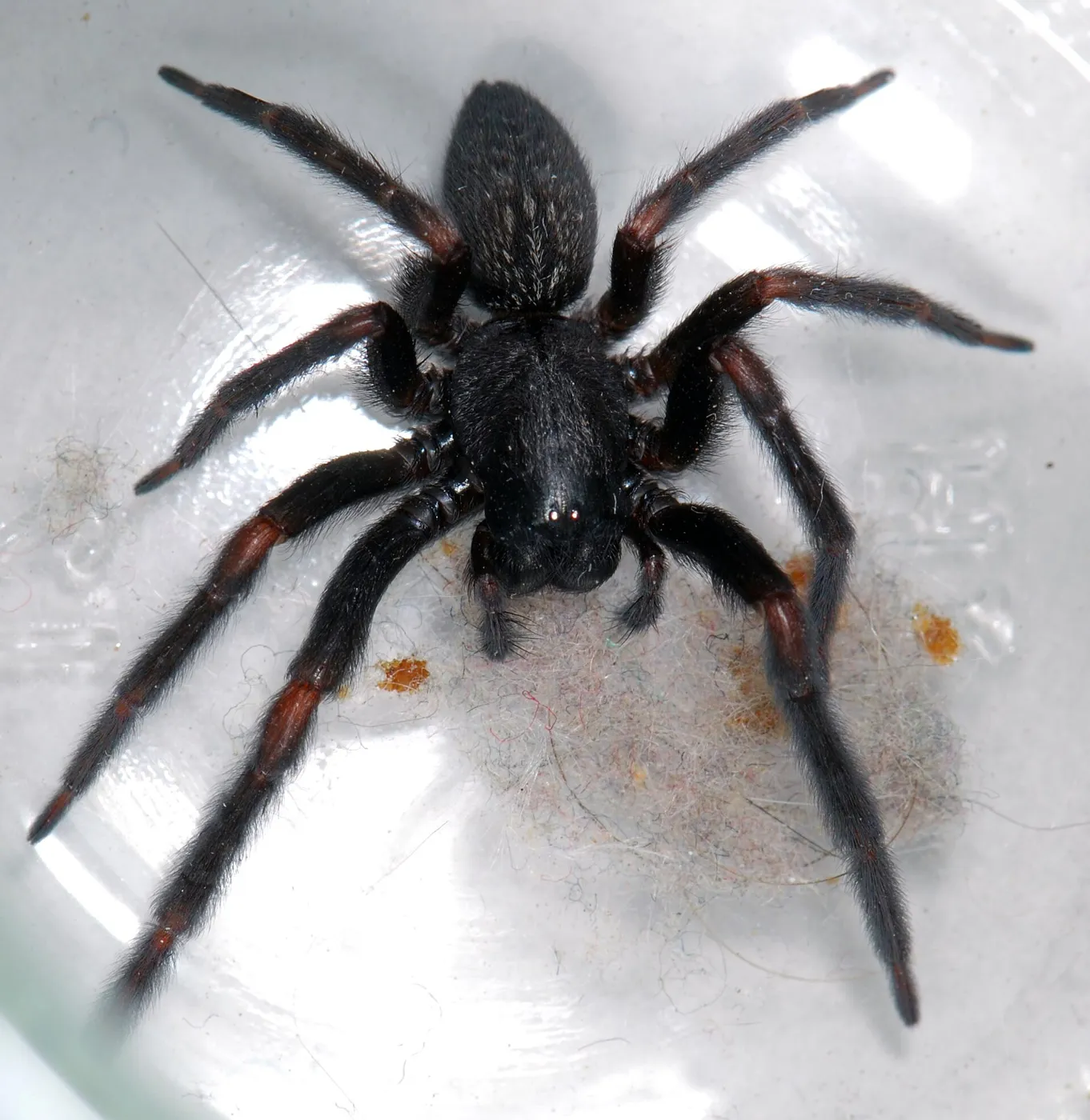
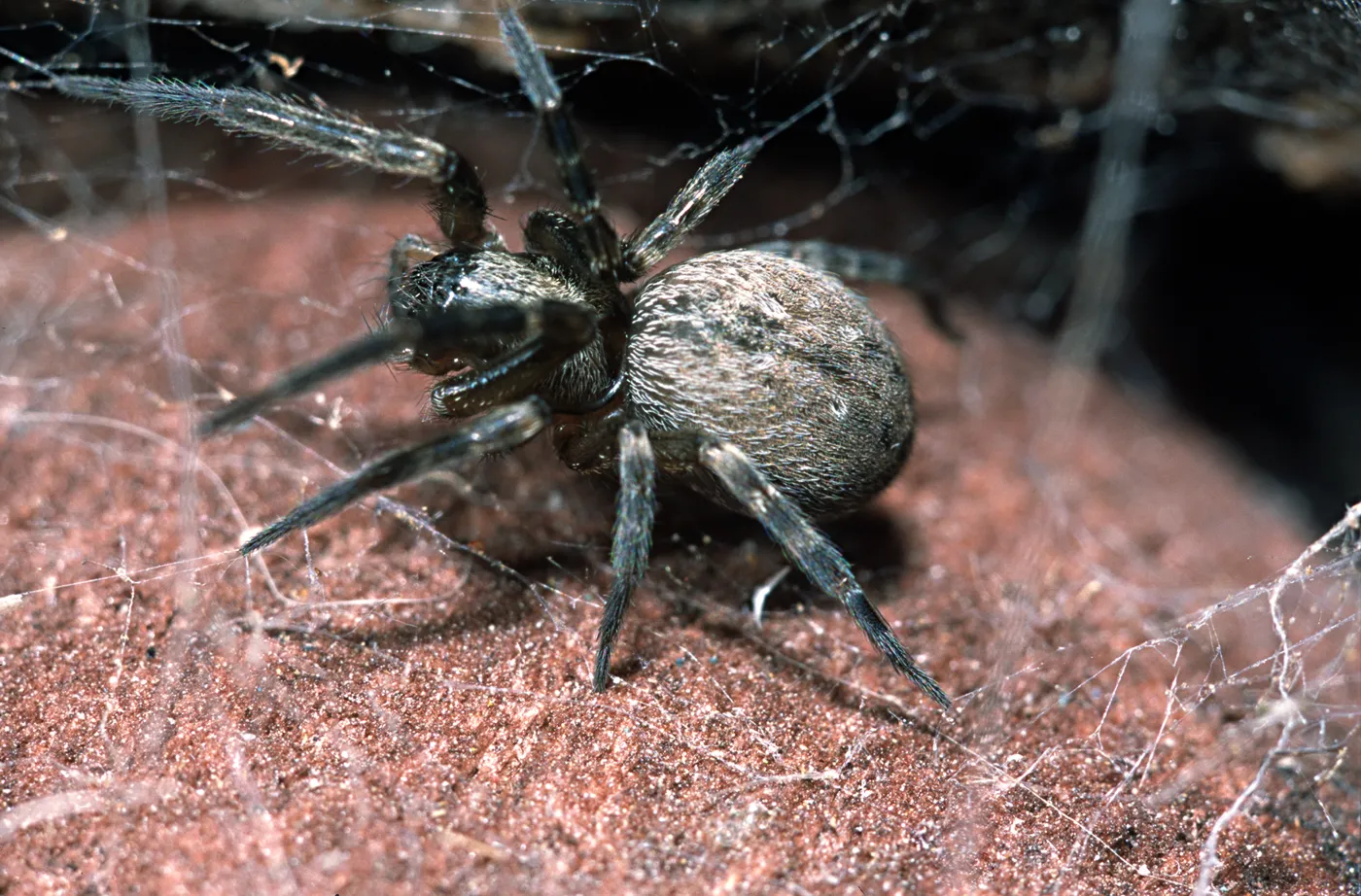
Black house spider
Badumna insignis
Females up to about 18 mm
- Dark brown to black body and legs
- Charcoal abdomen, faint white marks
- Lacy, messy web with a funnel entrance
- Window frames, wall cracks, tree bark
Photo: Pengo, CC BY-SA 3.0, via Wikimedia Commons.
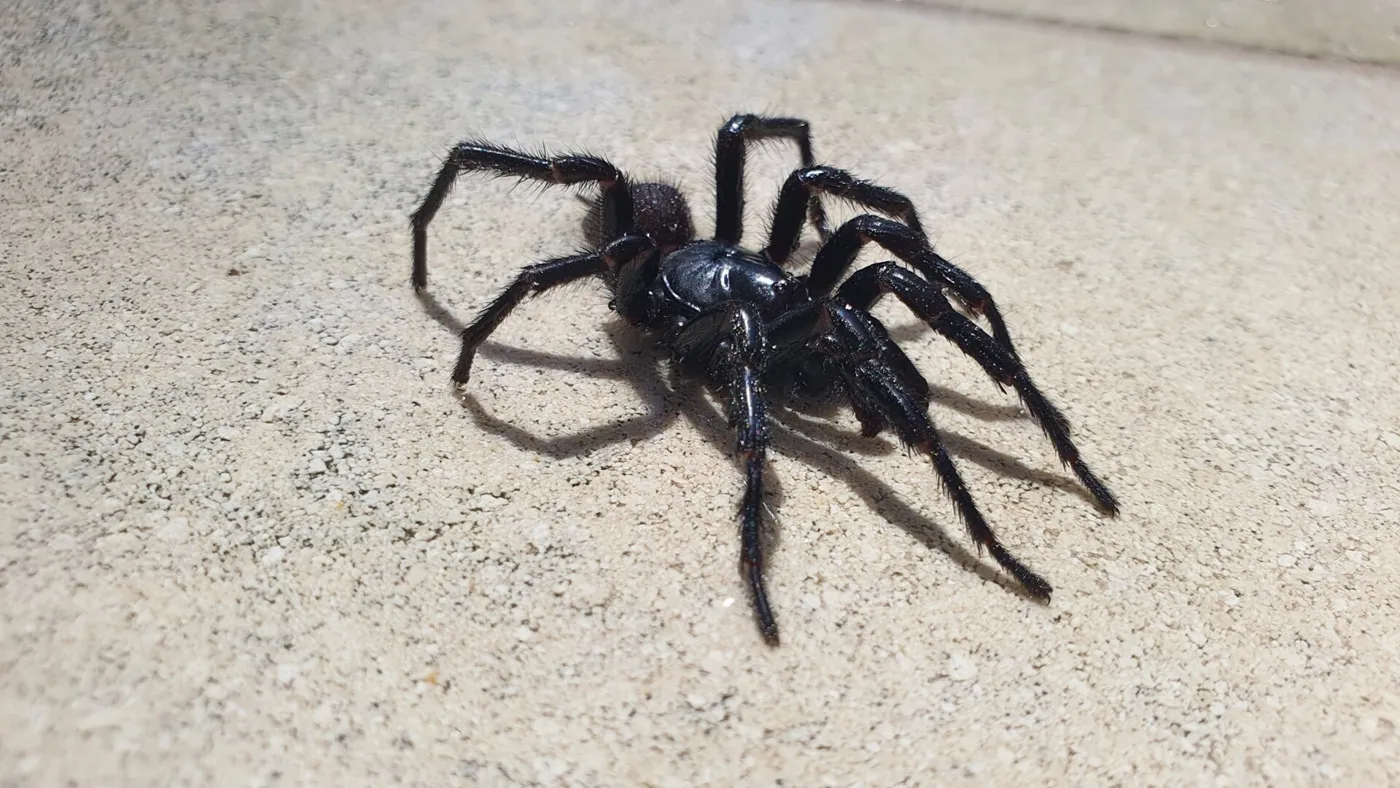
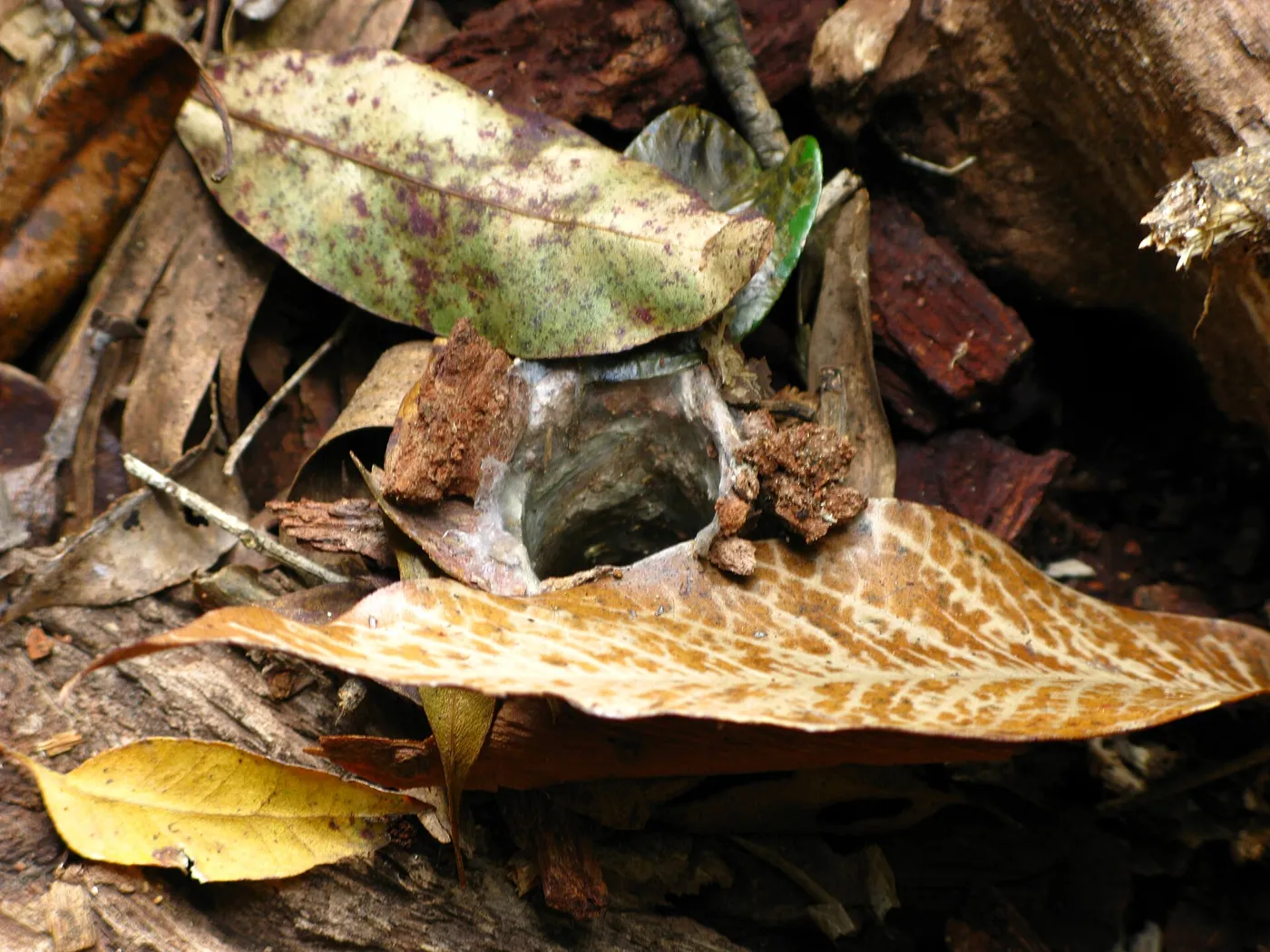
Funnel-web spider (for comparison)
Atracidae
Shiny, dark brown to black
- Shiny, not matt
- Finger-like spinnerets at the tail
- Silk-lined burrow under logs and rocks
- A bite is a medical emergency
Photo: dreworme, CC BY 4.0, via Wikimedia Commons.
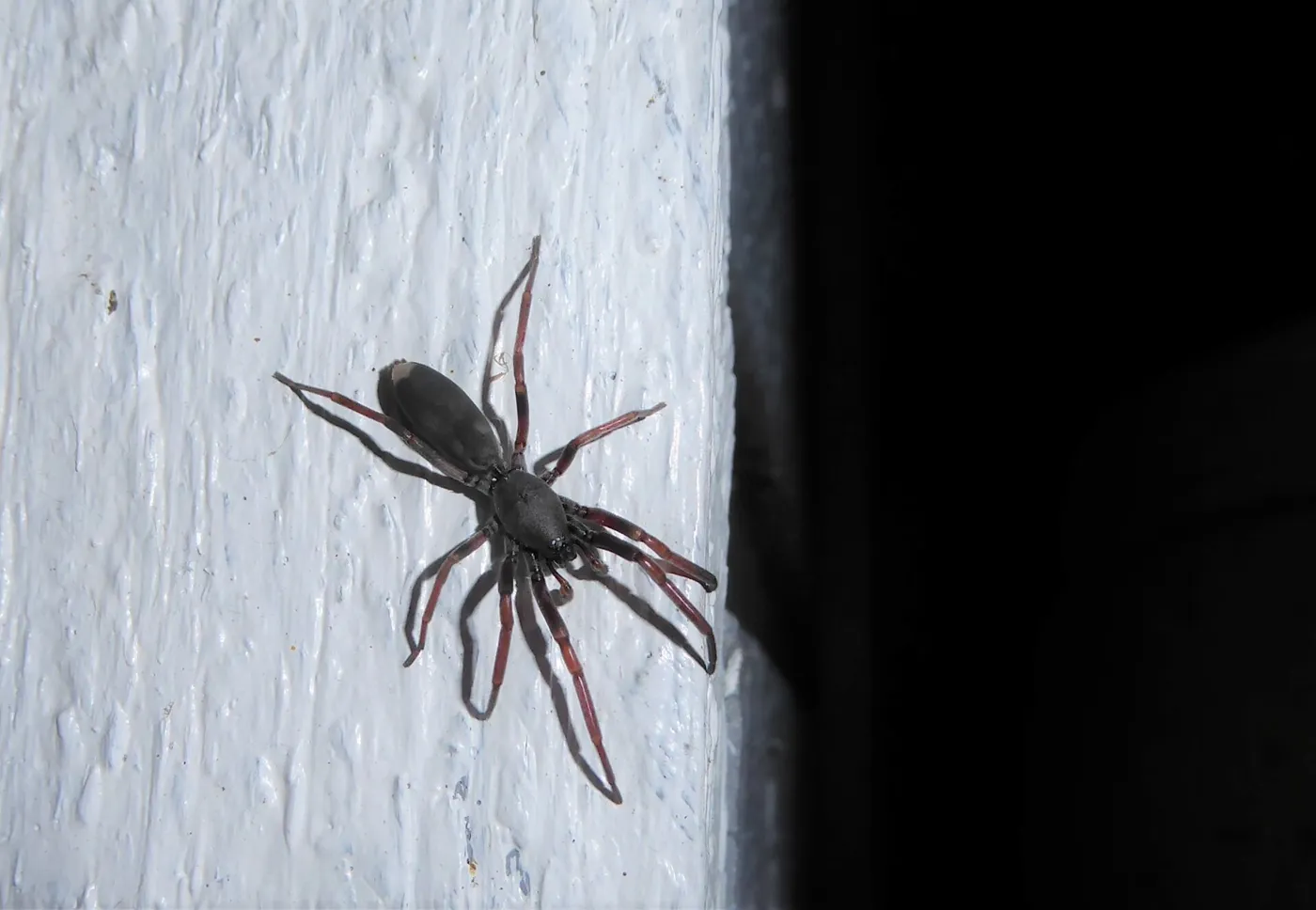
White-tailed spider (for comparison)
Lampona
Grey to black, white patch
- White patch on the abdomen
- Builds no web, hunts at night
- Eats black house spiders
- Not considered dangerous
Photo: aalbertrebergen, CC BY 4.0, via Wikimedia Commons.
Black house spider identification
The Australian Museum describes the black house spider as a dark, robust spider. Check these tells:
- Colour. The front body (carapace) and legs are dark brown to black. The abdomen is charcoal grey with a pattern of white markings on top, which can be faint.
- Hair. Grey hairs are usually visible on the carapace.
- Size. Females are bigger than males. Spider Identifications gives females a body up to about 18 mm long, with a leg span near 30 mm, and males about 9 to 10 mm. Ludwig Koch first described the species in 1872.
- Web. A lacy sheet of silk around one or more funnel-shaped entrances. Old web goes grey and woolly.
- Place. Window frames, wall crevices, brickwork, fences, rock walls and tree trunks.
A dark spider in a funnel-shaped hole in a window corner, with grubby, lacy webbing around it, is almost certainly a black house spider.
Males and females
The female almost never leaves her web. The Australian Museum says she keeps adding layers of silk, which is why old webs look grey and woolly. Males wander in search of females, so one walking across the floor is most likely a male: smaller and slimmer, with longer legs.
The grey house spider
Melbourne homes also have the grey house spider (Badumna longinqua), a close relative with the same style of web. Going by Spider Identifications, it is the smaller of the two (10 to 14 mm), its body reads grey instead of black, and its sheet web is lighter and less dense. The advice on this page applies to both.
Black house spider or funnel-web?
The funnel-shaped web entrance is where the confusion comes from. The Australian Museum is clear that black house spiders are not related to funnel-webs, and do not look or live like them.
| Feature | Black house spider | Funnel-web |
|---|---|---|
| Where it lives | Window frames, walls, under eaves, on bark | Silk-lined burrows under logs and rocks, or crevices in tree trunks |
| Web | Lacy, untidy sheet around a funnel entrance | Burrow entrance, which the Australian Museum says is usually less funnel-like |
| Body | Dark brown to black, charcoal abdomen, grey hairs | Shiny, dark brown to black, finger-like spinnerets at the tail |
| Behaviour | Timid, bites are infrequent | Males wander over summer and autumn and can end up in houses or pools |
| Bite | Painful, local swelling | Life-threatening: call 000 |
Better Health says there are around 40 funnel-web species, from northern Queensland to Tasmania, and not all are dangerous to people. The Sydney funnel-web, the only one with recorded human deaths, is not found in Victoria.
Black house spider or white-tailed spider?
White-tailed spiders are the other dark spider people find indoors. Better Health describes them as grey to black with a white patch on the tail, and they build no web. The Australian Museum says they hunt other spiders at night, black house spiders included, so clearing house spider webs keeps white-tails down too.
The Museum says a white-tail bite can cause burning pain, then swelling and itch. Claims that they cause skin ulcers are unconfirmed.
Black house spider bite
The Australian Museum calls black house spiders timid and says bites are infrequent. Most happen when the spider is pressed against skin: a hand in a window frame, a moved pot plant, a garden glove.
The Museum says the bite may be quite painful, with local swelling. Nausea, vomiting, sweating and giddiness are occasionally recorded.
First aid
From healthdirect, for spiders other than funnel-webs and mouse spiders:
- Wash the bite with soap and water.
- Apply antiseptic cream if you have it.
- Put an ice pack, wrapped in a cloth, on the bite to reduce swelling and pain.
- Use paracetamol or ibuprofen for pain if needed.
Better Health suggests the cold pack for 15 minutes, and again if the pain continues. healthdirect says to see a doctor if the pain is bad, the bite has not settled in a few hours, or swelling gets worse after 24 to 48 hours.
Call triple zero (000) for signs of a severe allergic reaction: noisy breathing, a swollen tongue or throat, dizziness or collapse. For advice at any hour, call the Victorian Poisons Information Centre on 13 11 26.
Where black house spiders live around a Melbourne home
The Australian Museum lists tree trunks, logs, rock walls and buildings, including window frames and wall cracks. Young spiders may sit quite exposed, but the ones that survive to adulthood have usually found a secure retreat under bark or in a deep crack. Around a house, check window corners and fly screens, gaps under the eaves, letterboxes and meter boxes, old paling fences and woodpiles.
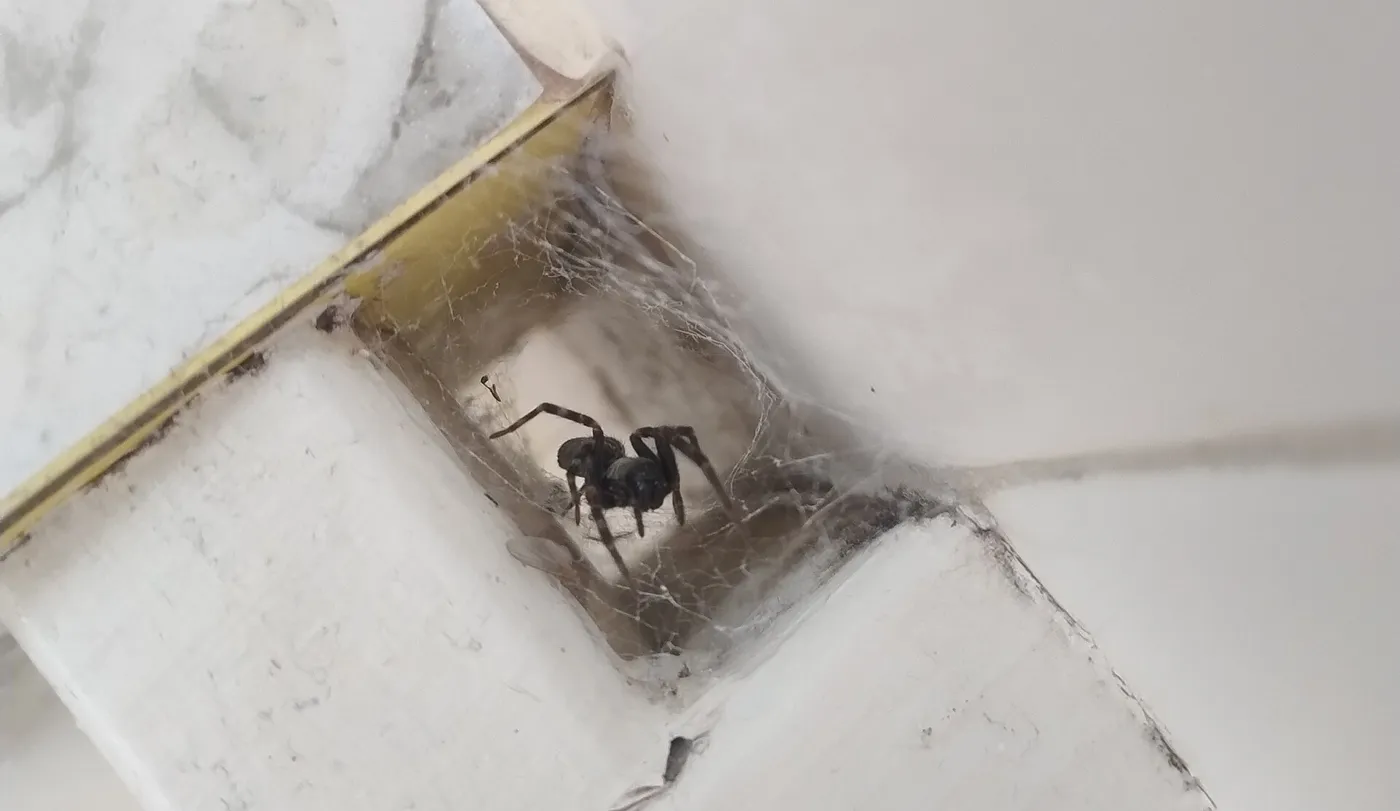
Around houses, the Australian Museum says they eat moths, beetles and termites drawn to lit windows at night. Their silk is not sticky: it is made of fine combed strands that snag insects' spiny legs. New silk is mostly laid at night.
When you will see them in Melbourne
When to expect them in Melbourne
Black house spiders
Present all year in window frames and wall cracks. They mature in summer and live about two years. Source: Australian Museum, Black House Spider.
peak around quiet · Months run January to December, Melbourne seasons.
Black house spiders are present all year. The Australian Museum says they mature in summer and live for about two years. The female guards her white egg sacs inside the retreat until they hatch.
How to get rid of black house spiders
Many people leave the ones outside alone, because they eat insects. If one is where someone could be bitten:
- Wear gloves to clean windows, move pots or garden, as healthdirect recommends.
- Brush or vacuum the web away, funnel entrance included.
- Catch and release. healthdirect's jar method: put a jar over the spider, slide a card under it, turn it up and release it well away from the house.
- Fill gaps in window frames and brickwork.
- Dim the lights near windows at night, so there is less food.
Are black house spiders dangerous?
Not to most people. Better Health lists Australia's venomous spiders as funnel-web, mouse, redback and white-tailed spiders, with antivenoms for redback and funnel-web bites. The real risk is mistaking a funnel-web for a black house spider.
Questions people ask
Is the black house spider poisonous?
It is venomous, like nearly all spiders, but its bite is not considered life-threatening for most people. Expect pain and local swelling.
Can a black house spider kill you?
There is no record of that in the sources used here. The danger is a funnel-web bite being mistaken for a black house spider bite.
Why is there a black house spider in my window every year?
Window frames give a secure crack for a retreat and, at night, a steady supply of insects drawn to the light. Females can live for about two years and rarely leave the web.
Do black house spiders wander indoors?
Females rarely leave the web unless forced. The ones found walking across floors and walls are usually males searching for females.
Is it a funnel-web or a black house spider?
Look at where it lives. A black house spider sits in a lacy web on a window frame, wall or tree. A funnel-web lives in a burrow in the ground and has a glossy black front body.
This guide is general information, not a pest inspection. For a building, a sale or a treatment, get a licensed pest manager to look in person.
References
7 sources, each checked 2026-10-25