
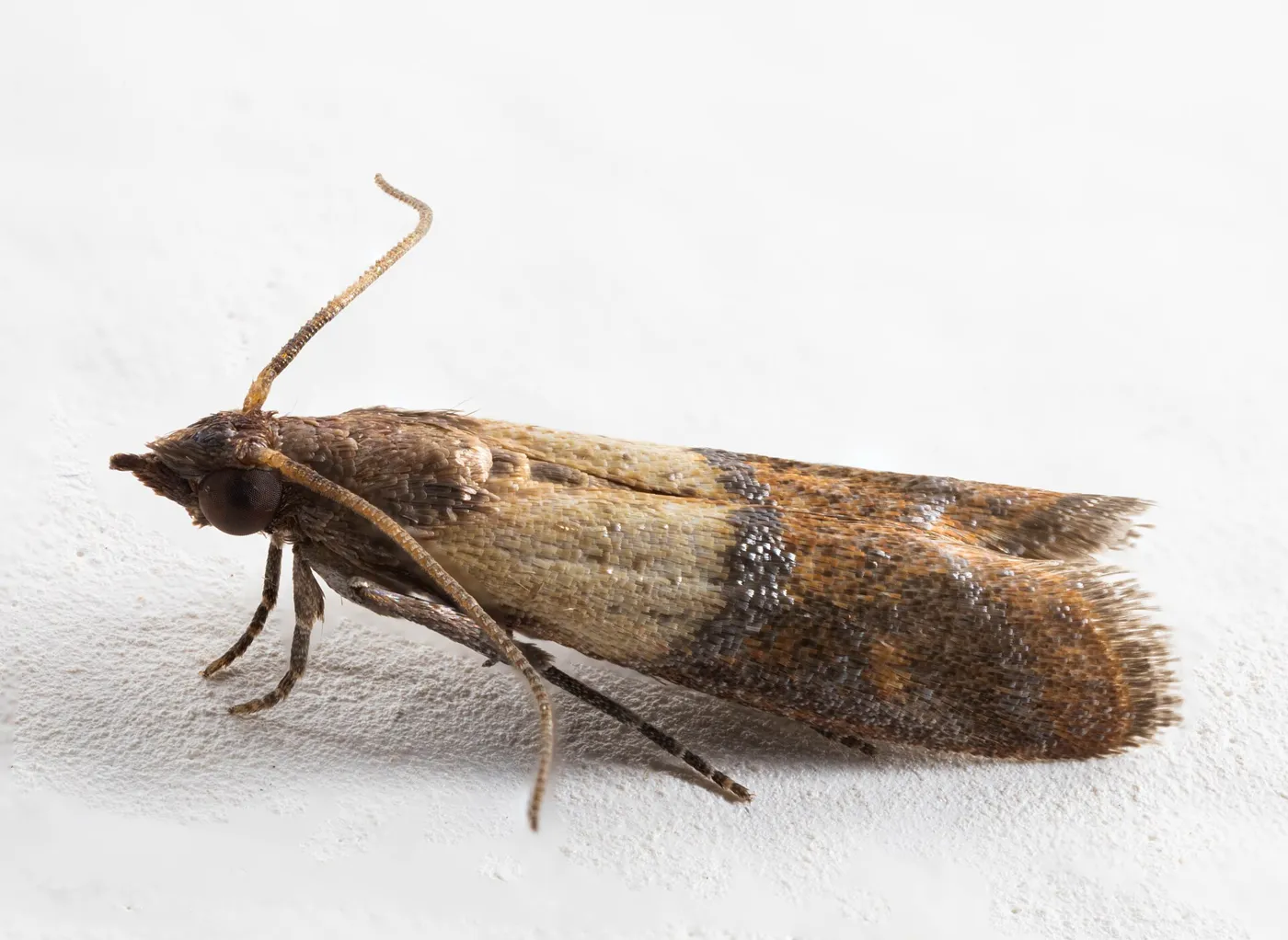
Pantry moths are small moths, usually the Indian meal moth, whose grubs live in dry food. You notice the adults first, fluttering around the kitchen at night, with front wings that are pale near the body and coppery brown towards the tips. The real problem is the grubs in flour, oats, nuts, spices or pet food, given away by silky webbing.
Is it this?
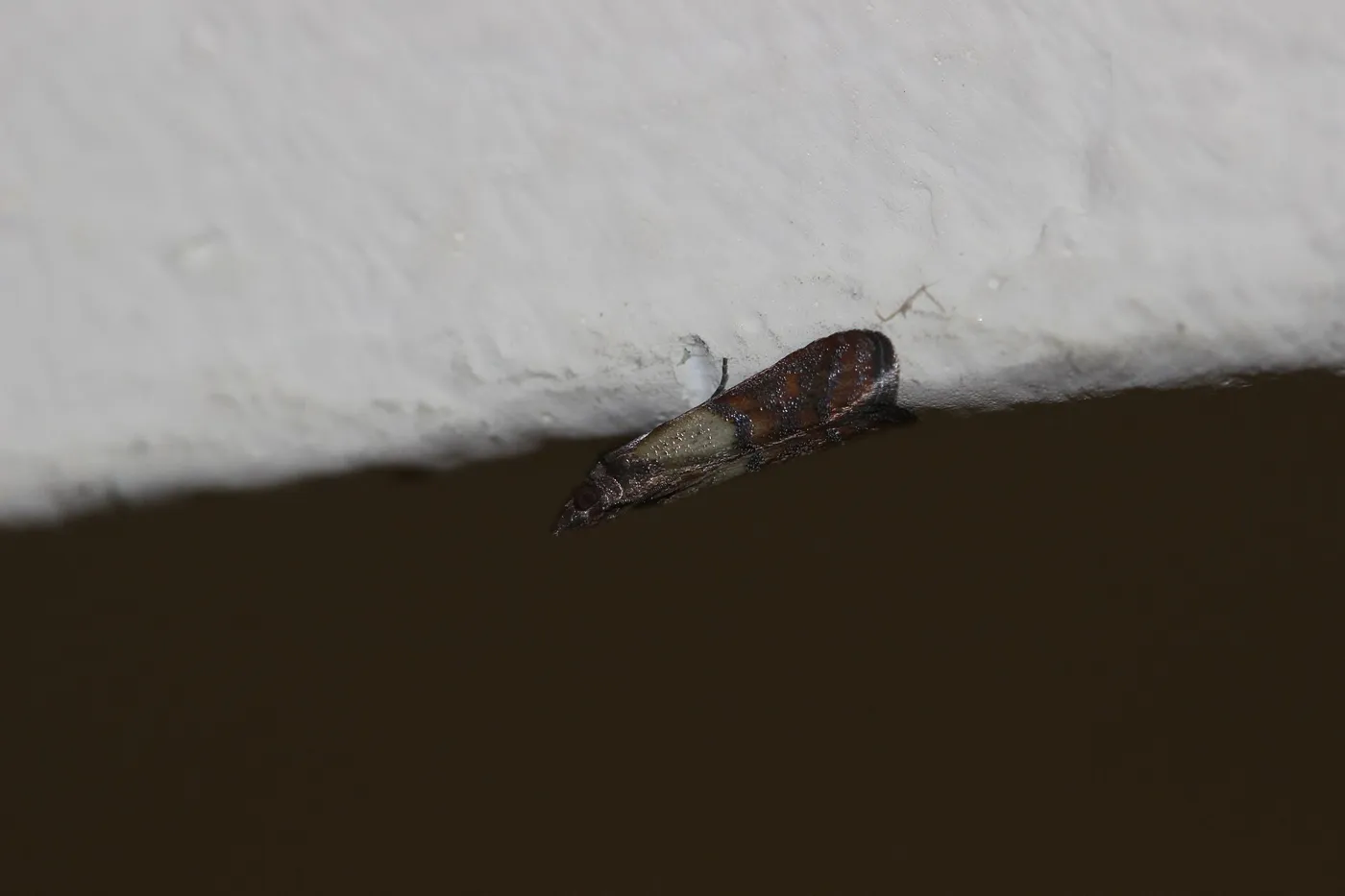
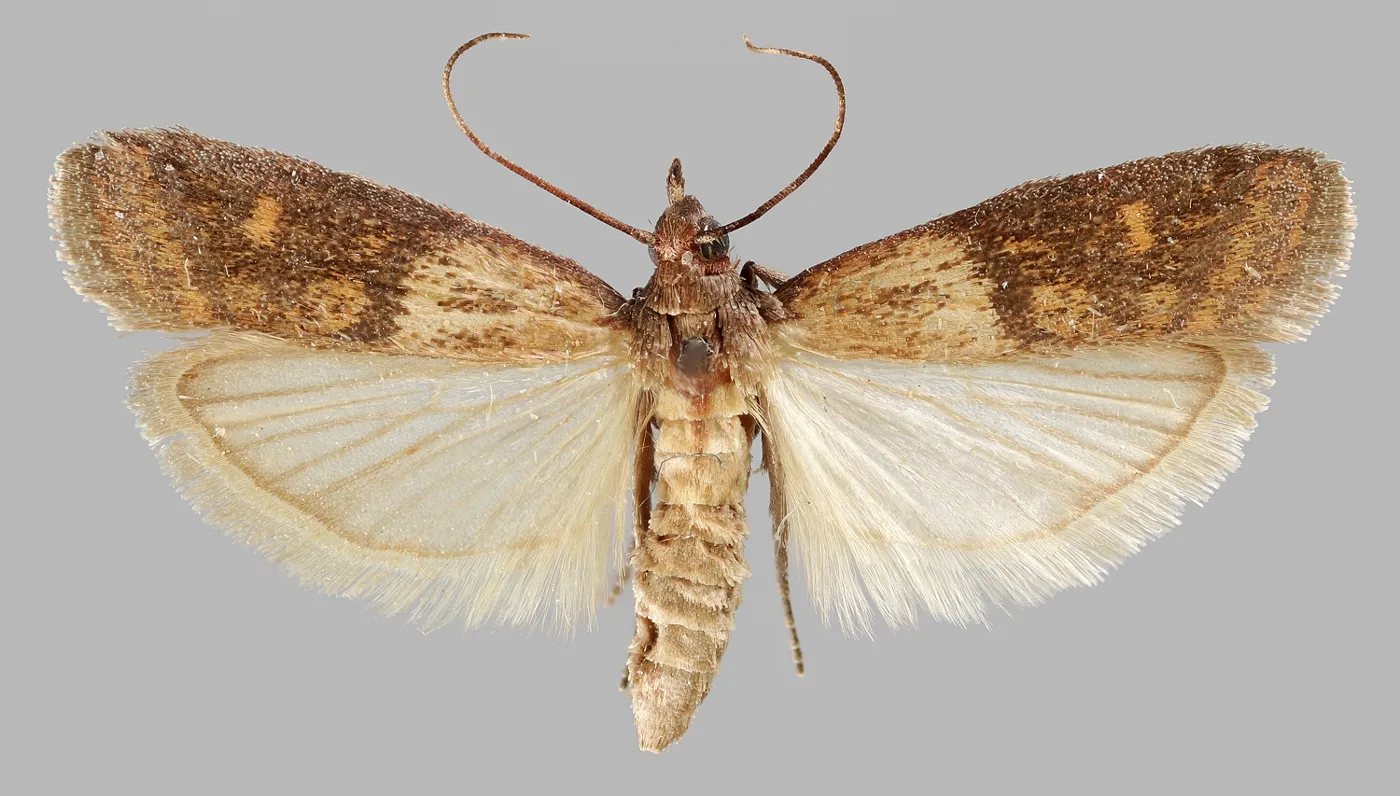
Pantry moth (adult)
Plodia interpunctella
Wingspan about 10 to 15 mm
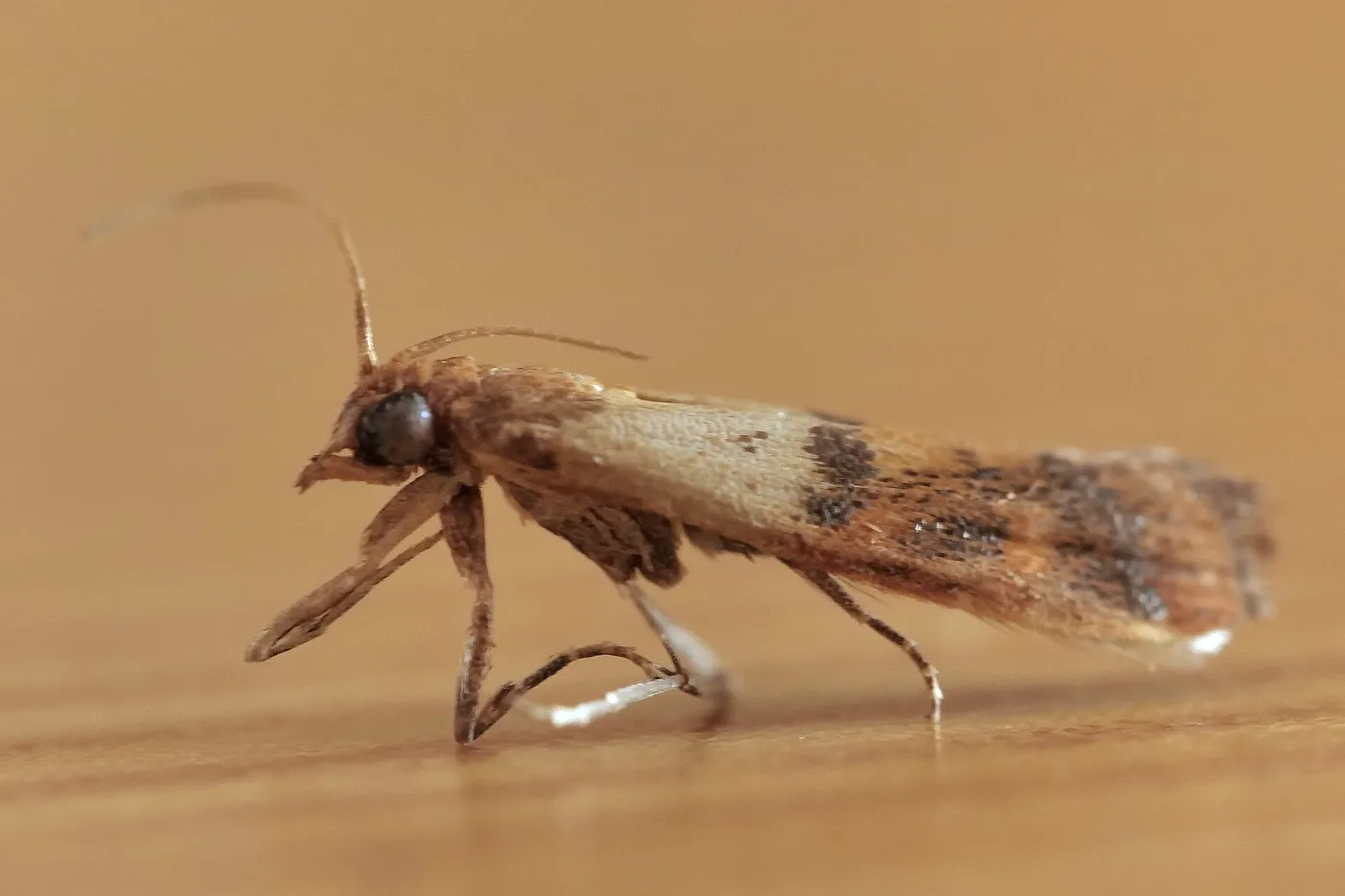
- Two-tone front wings: pale base, coppery brown tips
- Rests with wings folded flat like a tent
- Flutters in the kitchen at night
- Does not eat: the grubs do the damage
Photo: Fvukajlovic, CC BY 4.0, via Wikimedia Commons.
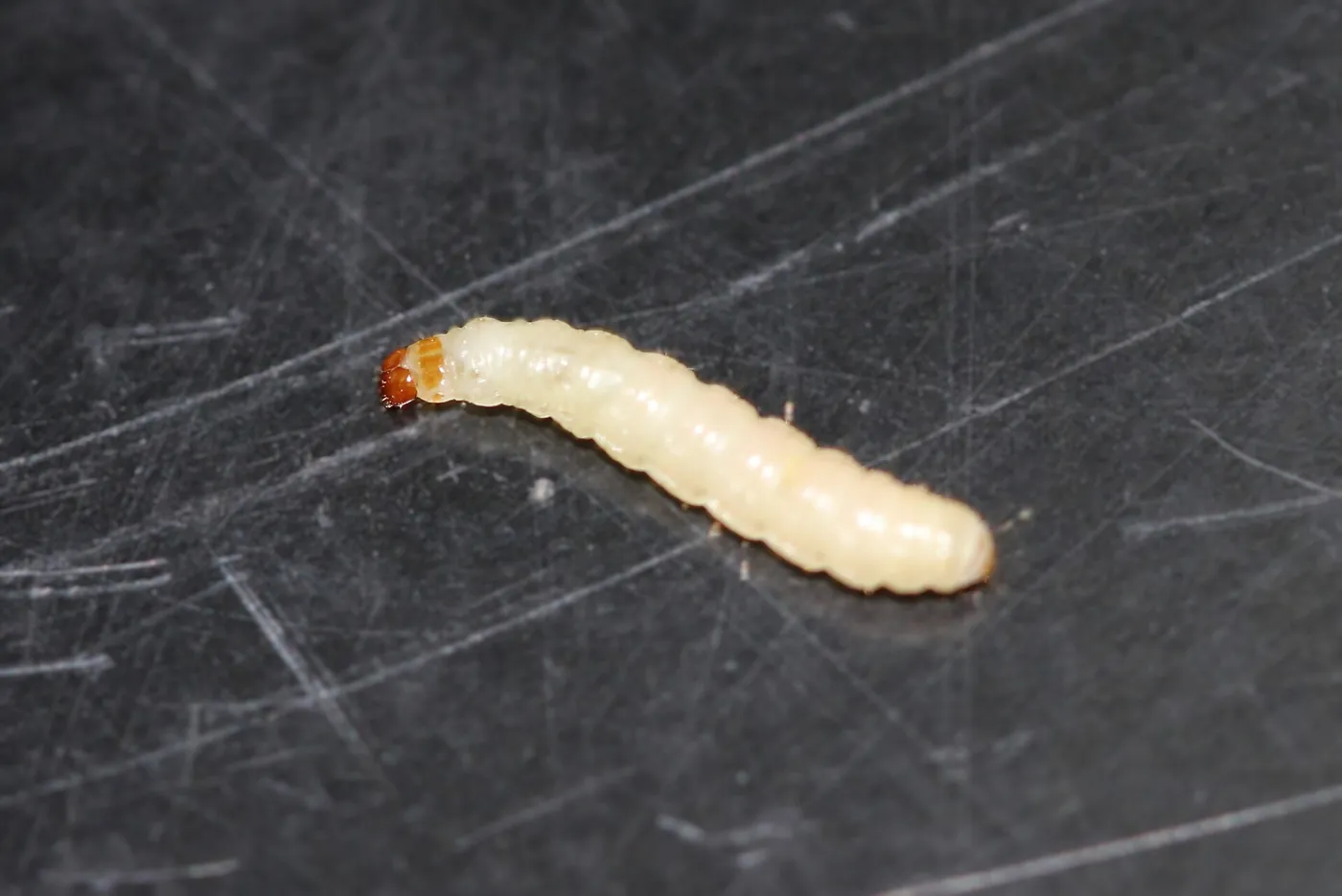
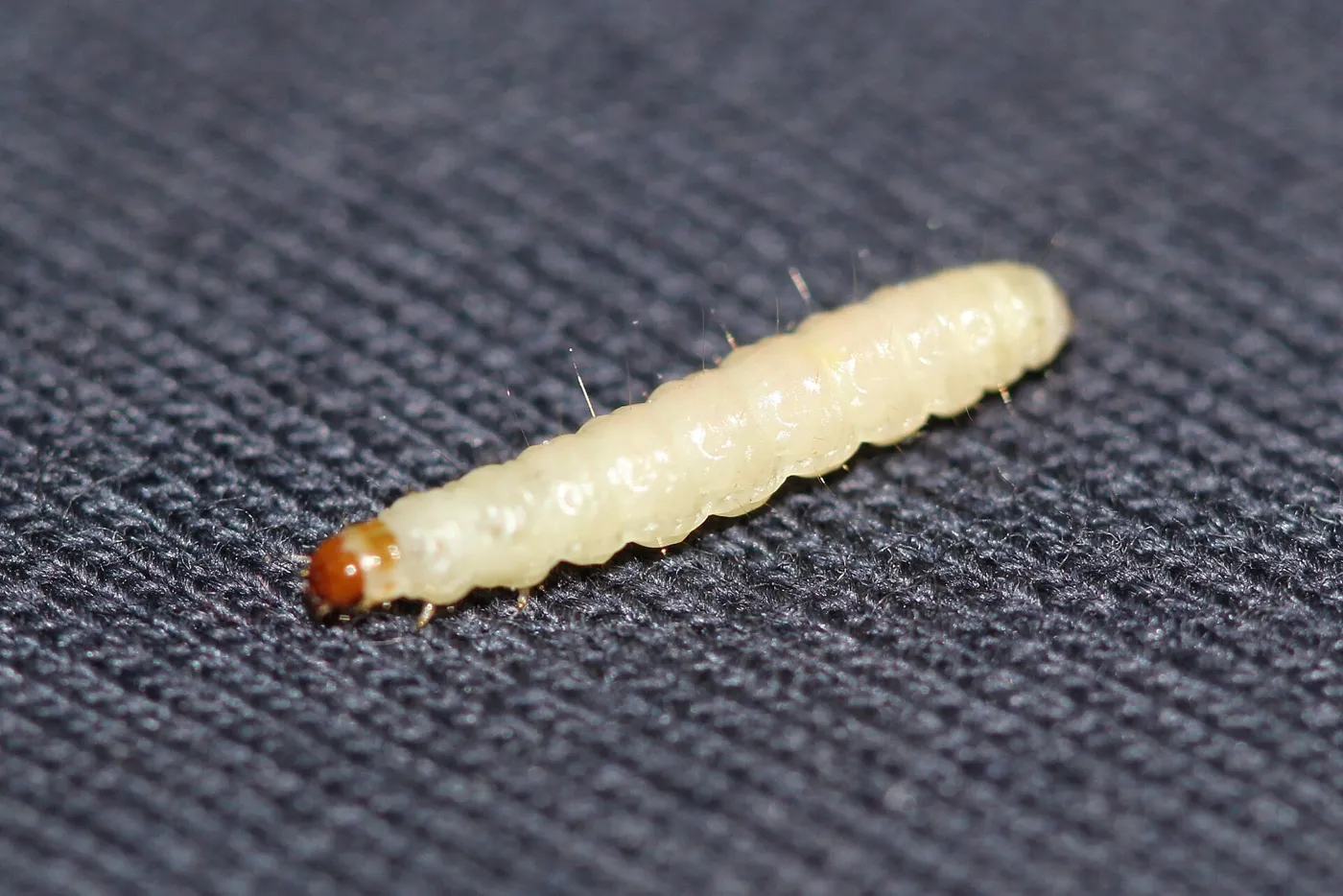
Pantry moth grub
Larva
Up to about 12 mm
- Off-white to pinkish, darker head
- Leaves silk webbing and clumps in food
- Wanders up walls and onto ceilings to pupate
- Can chew through paper and thin plastic
Photo: Fvukajlovic, CC BY 4.0, via Wikimedia Commons.
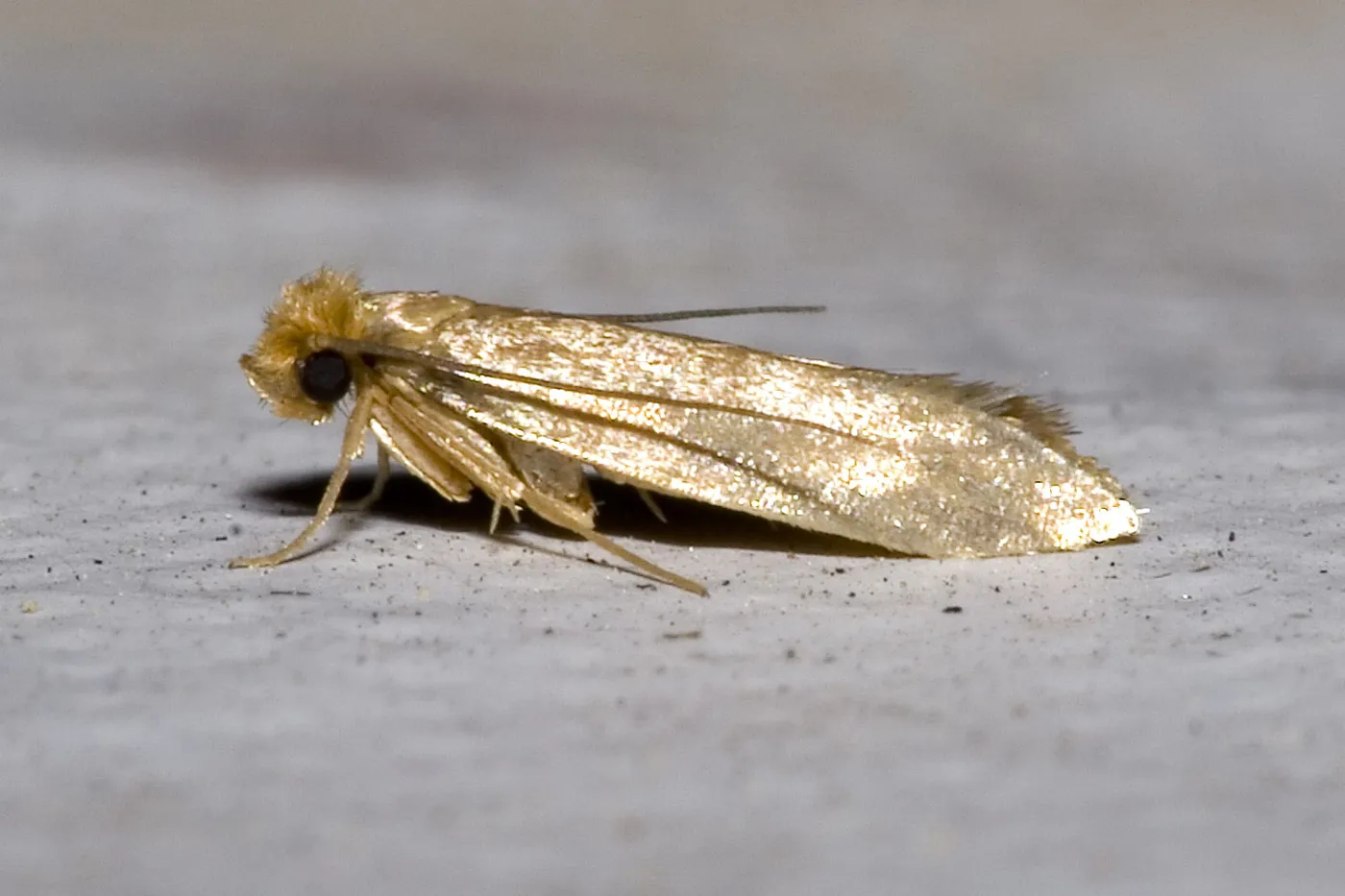
Clothes moth (for comparison)
Tineola bisselliella
Wingspan 12 to 17 mm
- Plain golden wings with hairy fringes
- Reddish hair on the head
- Prefers dim wardrobes and rugs
- Grubs eat wool and other natural fibres
Photo: Olaf Leillinger, CC BY-SA 2.5, via Wikimedia Commons.
What pantry moths look like
The pantry moth found in most homes is the Indian meal moth (Plodia interpunctella). London's Natural History Museum describes it as a small, distinctive moth with a wingspan of about 10 to 15 mm. The front wings are purplish or coppery brown on the outer part and pale, yellowish buff at the base. The hind wings are greyish white. In some lights the adults can look almost black.
The grubs
The grubs (larvae) do all the eating. They are white to pinkish, with a brown head, and grow to about 12 mm long. As they feed they spin silk through the food, which clumps it together. The Museum says this webbing is usually the first sign anyone notices.
The eggs and cocoons
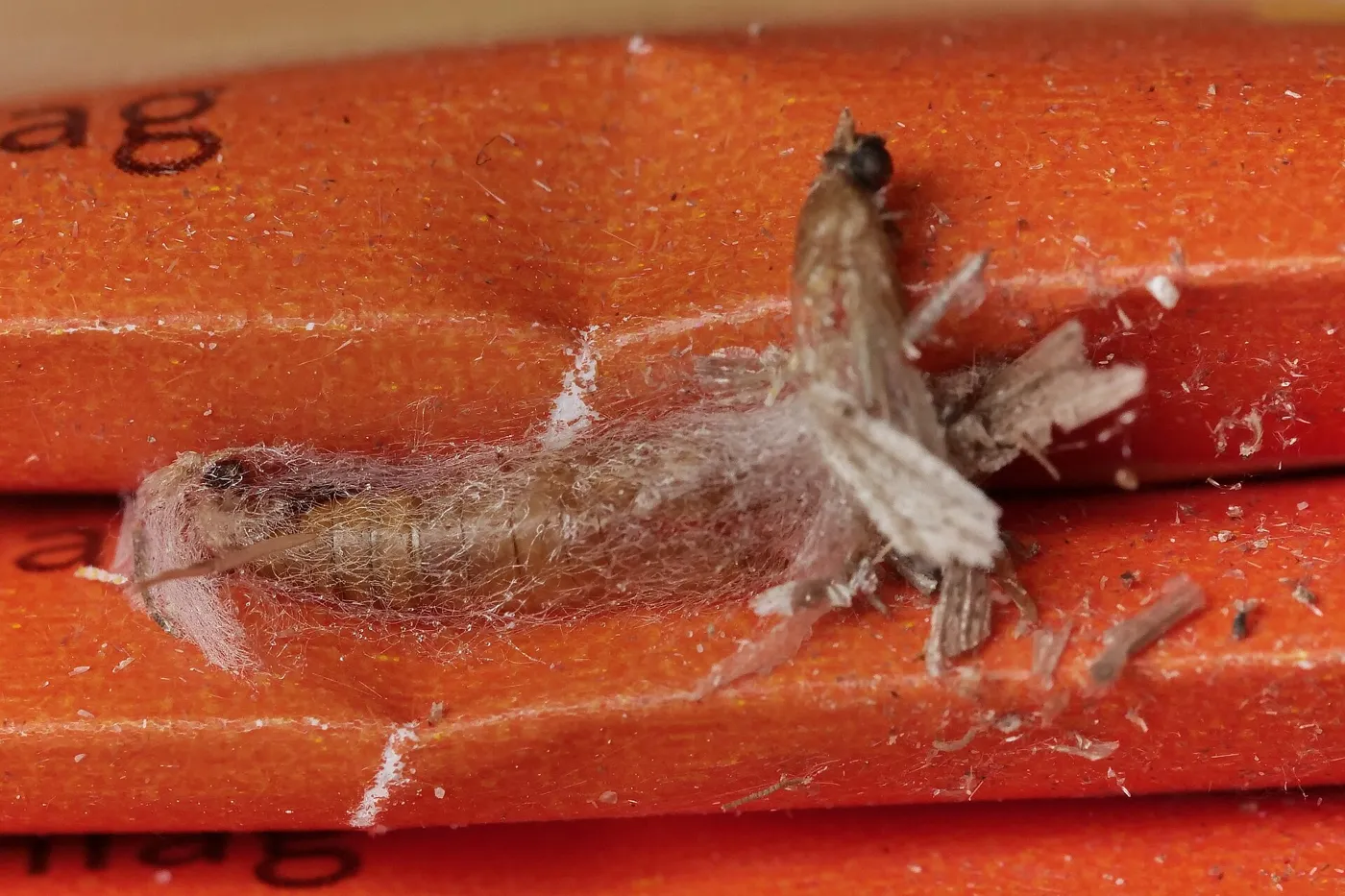
Eggs are tiny, greyish white and laid in cracks on or near food. A single female can lay up to 400, according to the Museum. Fully grown grubs leave the food to spin white silk cocoons, which is why people find them on walls and ceilings, far from the cupboard.
Signs of pantry moths in your kitchen
- Moths flying at night, especially near the pantry or the light in the kitchen.
- Webbing in food, particularly in the corners of packets, at the top of cereal boxes and in the folds of paper bags.
- Clumps in flour, grains or cereal that are stuck together with silk.
- Tiny holes in packaging. The University of California's integrated pest management program lists tiny holes in a food container as a telltale sign.
- Grubs on walls and ceilings, looking for a place to pupate.
- Small cocoons in the joins of shelves, under lids and along the edges of the pantry door.
Which foods pantry moths infest
Clemson University's extension service lists grain products, dried fruit, seeds, crackers, nuts, powdered milk, chocolate, sweets, dried chillies, birdseed, dry pet food, flour, herbs and some beans. It notes that home infestations are often traced to birdseed and dry pet food, kept in large, open bags for a long time.
The University of California says the usual source is a packet damaged at the shop, or an opened one that is forgotten.
| Food | Risk | Why |
|---|---|---|
| Birdseed and dry pet food | High | Large bags, kept open for weeks, often in the laundry or garage |
| Flour, oats, rice, cereal | High | Opened, folded and used slowly |
| Nuts, seeds, dried fruit | High | Rich food in thin packaging |
| Spices and dried chillies | Medium | Used rarely, so an infestation goes unnoticed |
| Chocolate and sweets | Medium | Often stored loose |
| Sealed tins and glass jars | Low | Grubs cannot get through the lid |
Why the moths keep coming back
Pantry moths breed fast in a warm kitchen. The Natural History Museum's laboratory figures show eggs hatching in 3 to 8 days and a full life cycle taking about 25 to 60 days between 18 and 30°C, so there can be 2 to 8 generations a year. Grubs can also go into a resting state when conditions are poor and carry on later.
When to expect them in Melbourne
Pantry moths
They breed indoors all year. The warmer the kitchen, the faster each generation: about 25 to 60 days from egg to moth. Source: Natural History Museum, Indian meal moth.
peak around quiet · Months run January to December, Melbourne seasons.
Three things catch people out:
- The grubs chew through packaging. The Museum says they can bite through paper, cellophane and polythene, and small grubs crawl through tiny gaps and folds. A clip on a plastic bag does not stop them.
- The infestation has usually spread by the time you see it. The University of California says that by the time the insects are noticed, they have most often spread to other packets.
- They can wait. Some pantry pests live for weeks without food.
How to get rid of pantry moths
This is the method the University of California and the Natural History Museum recommend.
1. Find and bin every infested packet
Take everything out. Check every opened packet for webbing, clumps, grubs or tiny holes, especially in corners and folds. The University of California says to destroy any packet with the slightest sign. Seal it in a bag and take it straight to the outside bin.
2. Freeze anything you want to keep
If a packet looks clean but you are not sure, freeze it. Clemson recommends freezing at 0°F (about minus 18°C), the setting of a normal home freezer, and freezing grain products for 3 days after you buy them.
3. Vacuum and wash the cupboard
Vacuum shelves, cracks, hinges and the underside of shelves with a crevice tool to remove eggs and cocoons. Then wash with soap and water, as the University of California recommends, and let it dry. Clemson advises against soaking, because a pasty residue attracts pests. Empty the vacuum outside.
4. Move dry goods into airtight containers
Put flour, grains, cereal, nuts, dried fruit, spices and pet food into containers with tight lids. The University of California says plastic bags are not adequate.
5. Use moth traps to check it worked
The University of California explains that pheromone traps attract adult male moths, which stick to the trap. Put one near the cleaned cupboard and check it weekly. If a new batch turns up, inspect the food again.
How to stop pantry moths coming back
From the University of California's prevention list, with a Melbourne twist:
- Buy sealed, undamaged packets, in amounts you can use within 2 to 4 months, as Clemson suggests.
- Decant as soon as you get home into containers with tight lids.
- Never top up old food with new, and wash containers before refilling.
- Keep pet food and birdseed sealed in a bin with a lid.
- Freeze rarely used items such as special flours and spices.
- Keep a pheromone trap out for a few months after an infestation.
Pantry moths vs clothes moths
They are different insects with different fixes. The University of California notes that clothes moths are smaller and hairier. London's Natural History Museum says freezing at minus 20°C for a week, or heating fabric to 49°C for more than 30 minutes, kills every stage.
| Pantry moth | Clothes moth | |
|---|---|---|
| Where you see it | Kitchen, pantry, laundry with pet food | Wardrobes, rugs, stored wool |
| What the grubs eat | Dry food | Wool, upholstery, carpets and fur |
| Wings | Two-tone, coppery tips | Plain golden, no pattern |
| Fix | Bin infested food, clean, seal dry goods | Freeze at minus 20°C for a week or wash hot, vacuum, store in airtight bags |
If the moths are in your wardrobe and the holes are in your jumpers, they are clothes moths, and cleaning the pantry will not help.
Is it safe to eat food that had pantry moths?
The University of California says infested food can carry insect hairs, droppings and webbing, and may bring in microbes. Throw out anything with webbing, grubs or clumps. The Museum notes that eggs are extremely unlikely to survive cooking, so a stray one eaten by accident is unlikely to harm you.
Questions people ask
Do bay leaves keep pantry moths away?
None of the university and museum sources used for this guide recommend bay leaves. Their method is to bin infested food, clean, store dry goods sealed and freeze what you want to keep.
How long does it take to get rid of pantry moths?
A thorough cleanout clears most infestations straight away, but keep checking a trap for a few months, because a single missed packet can restart the cycle in weeks.
Why do I find pantry moth grubs on the ceiling?
Fully grown grubs leave the food to find a sheltered spot to spin a cocoon, so they climb walls and cross ceilings. Their source is still in the pantry.
This guide is general information, not a pest inspection. For a building, a sale or a treatment, get a licensed pest manager to look in person.
References
6 sources, each checked 2026-10-25
- Natural History Museum (London), Indian meal moth identification guide
- University of California IPM, Pantry pests
- University of California IPM, Pantry pests quick tips
- Clemson University Home and Garden Information Center, Indian meal moth
- Natural History Museum (London), Clothes moths identification guide
- APVMA, product register (PubCRIS)