
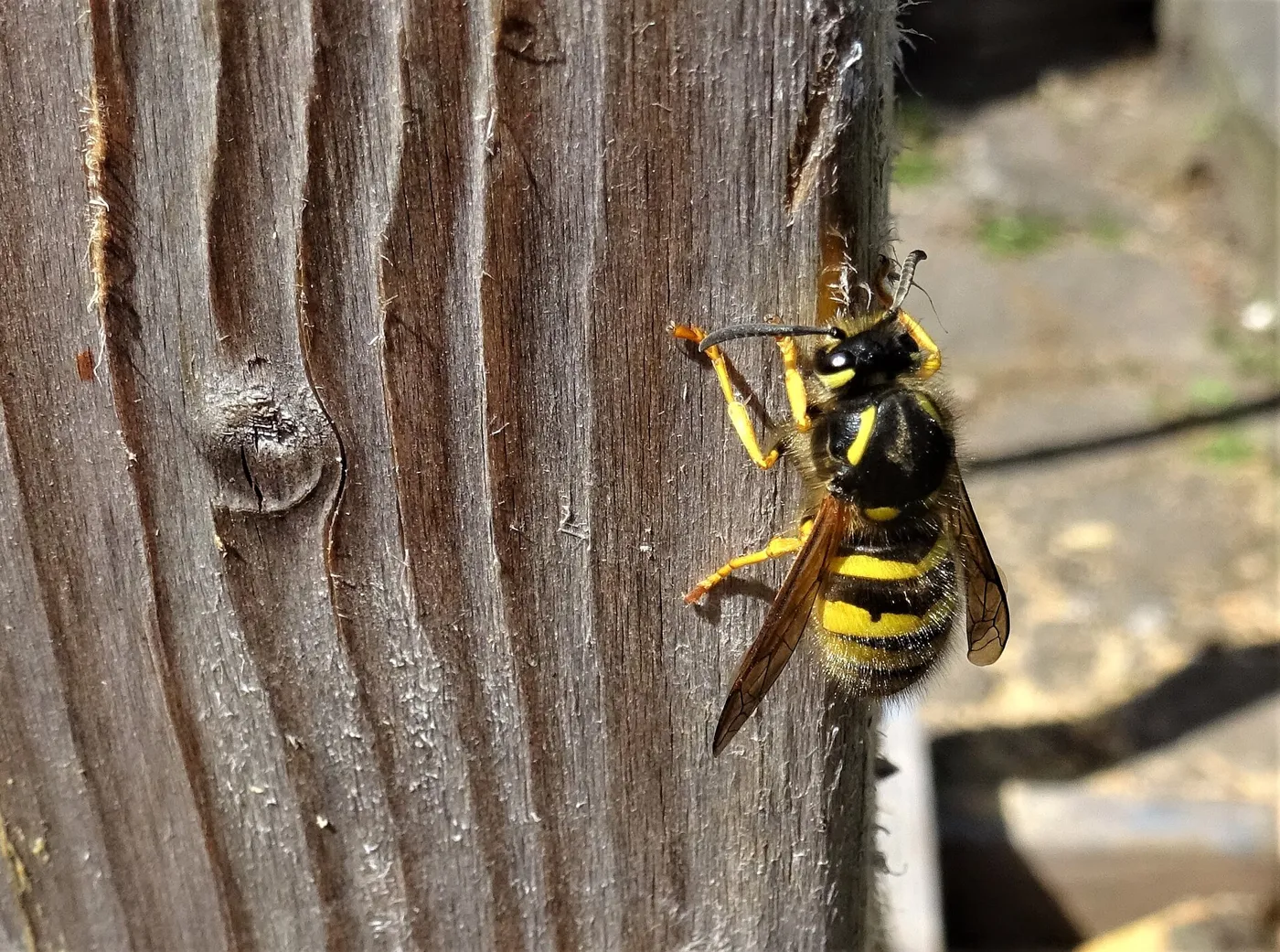
A European wasp is a stout wasp about 15 mm long with a bright yellow and black banded body, black dots on the yellow bands, black antennae and yellow legs. In Melbourne you mostly meet them in late summer and autumn, around barbecues, bins, pet bowls and open drinks. They nest out of sight in the ground or in wall cavities, and unlike bees they can sting again and again.
Is it this?
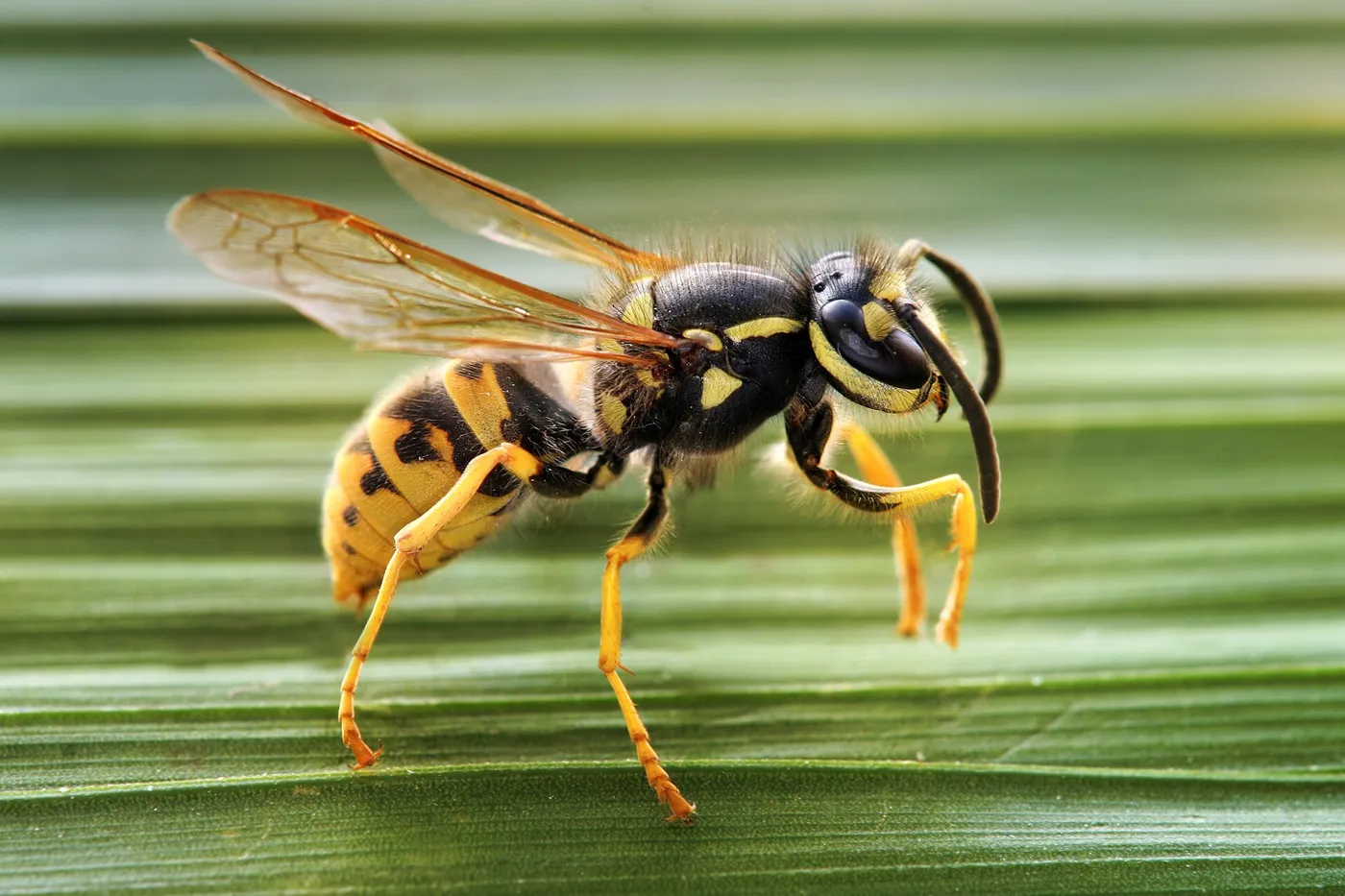
European wasp
Vespula germanica
About 15 mm, queens about 20 mm
- Bright yellow and black bands
- Black dots on the yellow bands
- Black antennae, yellow legs
- Folds its legs up close in flight
Photo: Richard Bartz, Munich aka Makro Freak, CC BY-SA 2.5, via Wikimedia Commons.
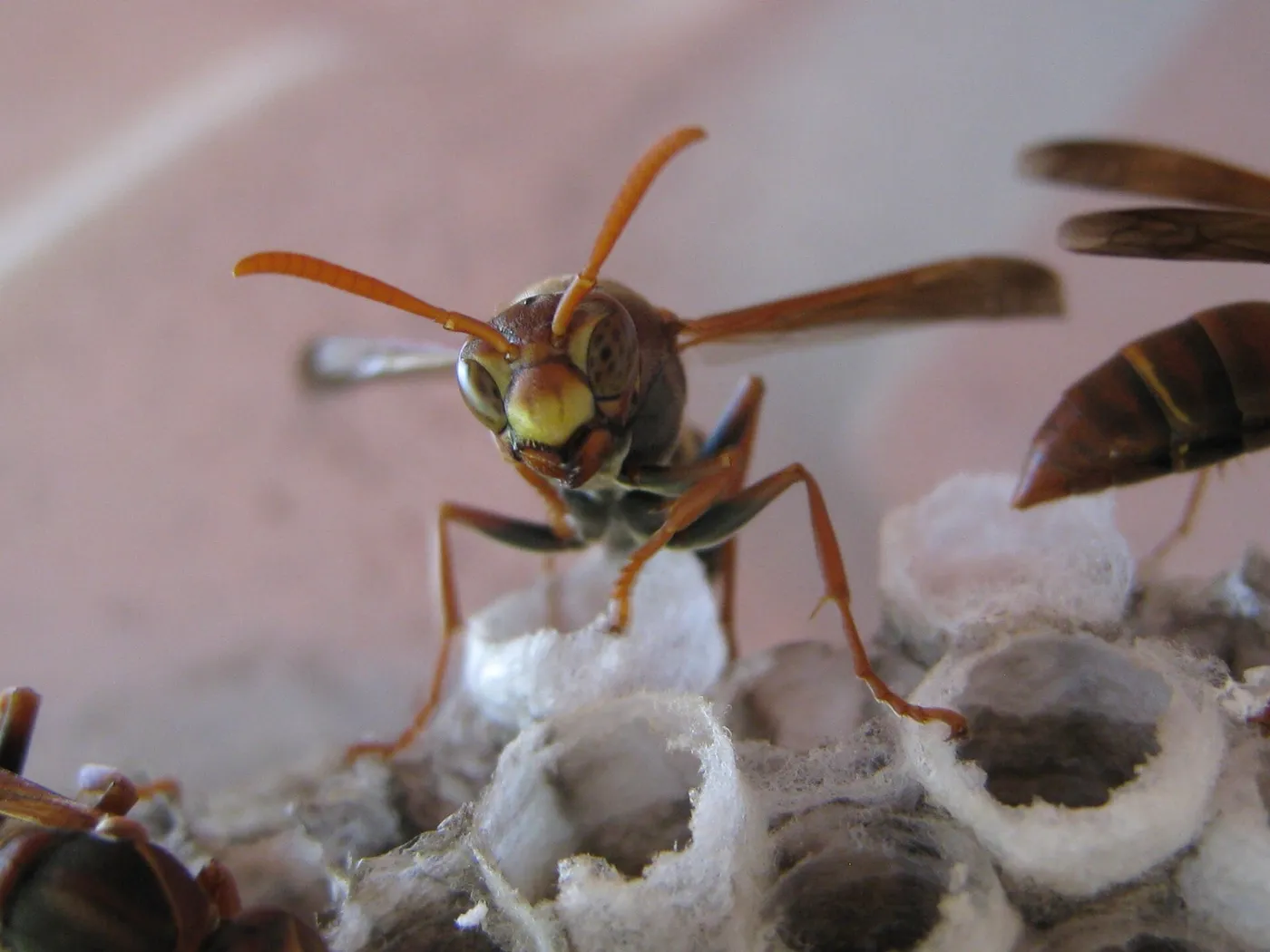
Native paper wasp
Polistes
Slimmer than a European wasp
- Mostly black and orange-brown, less vivid yellow
- Very narrow waist
- Open, umbrella-shaped papery nest under eaves
Photo: John Tann from Sydney, Australia, CC BY 2.0, via Wikimedia Commons.
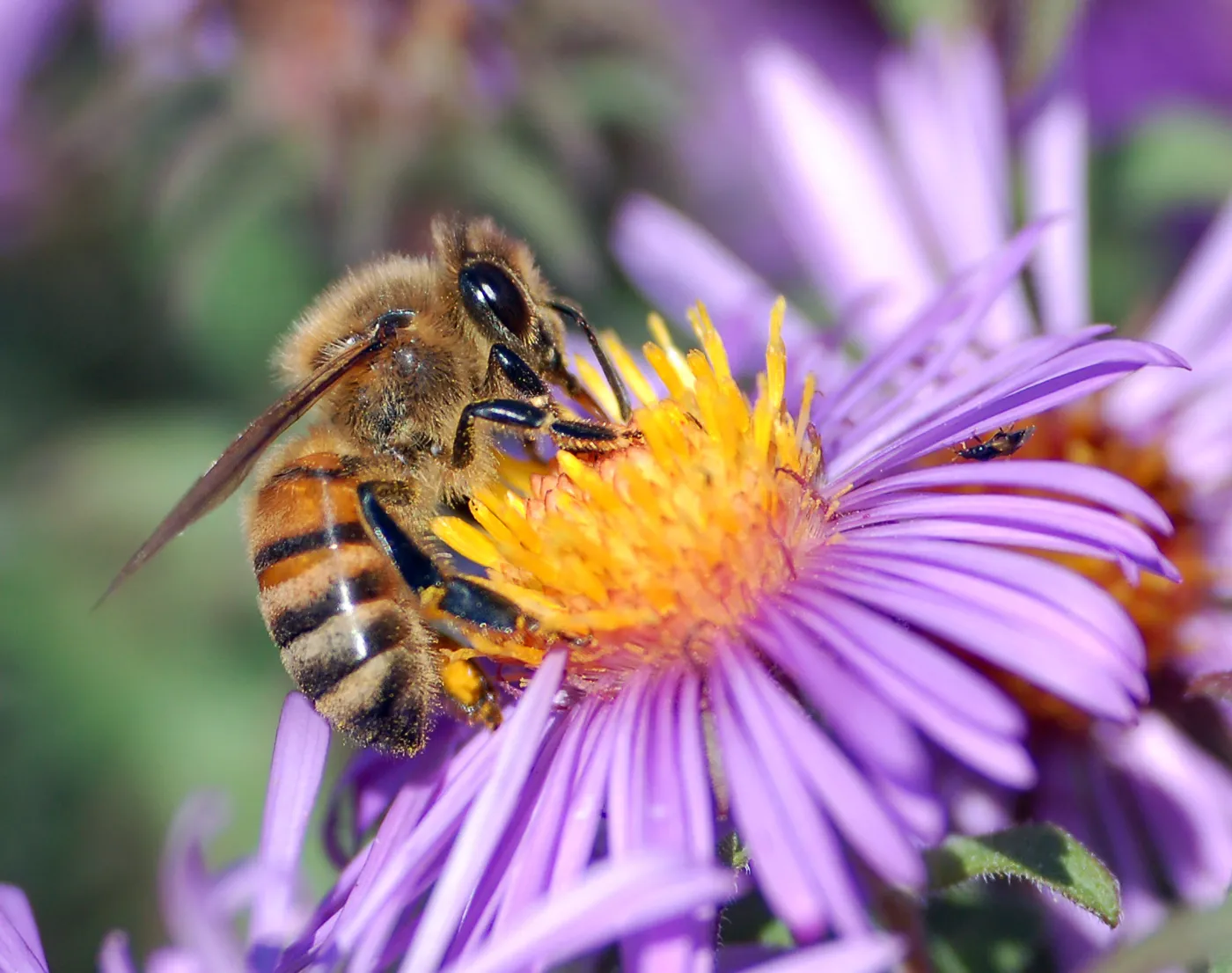
Honeybee
Apis mellifera
Round, furry and brown
- Hairy, brown and gold, not glossy
- Carries pollen on its back legs
- Dies after it stings
- Leaves the sting in the skin
Photo: John Severns (Severnjc), Public domain, via Wikimedia Commons.
European wasp identification: the five tells
The European wasp (Vespula germanica) is an introduced pest from Europe, North Africa and parts of Asia. The Australian Museum and Victoria's Better Health Channel identify it by these features.
- Size. Workers are around 15 mm long. A queen is about 20 mm.
- Colour. A bright yellow and black banded abdomen, with triangle-shaped black markings and a pair of black dots on each yellow band.
- Antennae. Black, all the way along.
- Legs. Yellow, and held close to the body in flight.
- Wings. Two pairs of clear wings, the front pair larger.
If you see a black and yellow wasp at your outdoor table that keeps coming back to your food or drink, it is very likely a European wasp. Native paper wasps feed on nectar, so they are far less interested in your plate.
European wasp vs paper wasp
Melbourne has native paper wasps too, and people confuse the two all the time.
| Feature | European wasp | Paper wasp |
|---|---|---|
| Colour | Vivid yellow and black | Mostly black with yellow or orange bands |
| Body | Stout, thick waist | Slender, very narrow waist |
| Nest | Hidden: underground or in a wall cavity | Open, papery cone of cells under eaves or branches |
| Interest in your food | High: meat, sweet food and drinks | Low: adults feed on nectar |
The Australian Museum describes native paper wasps as smaller, without the vivid yellow. The adults feed on nectar and catch caterpillars for their young, so they help the garden. healthdirect's sting pain ratings put a paper wasp sting at 3 out of 4 and a honeybee sting at 2.
US search results often mention the "European paper wasp" (Polistes dominula). That is a paper wasp, not the insect on this page.
European wasp vs bee
A honeybee is hairy, brown and gold, and visits flowers. A European wasp is smooth, shiny, bright yellow and black, and comes for meat, sweet food, drinks and bins. Better Health puts the key difference simply: unlike a bee, which can only sting once and leaves the stinger in the skin, the European wasp can sting again and again.
The Australian Museum adds that they are more aggressive than bees. Better Health notes that a stinging wasp releases a scent (a pheromone) that calls other wasps to attack.
When European wasps are worst in Melbourne
When to expect them in Melbourne
European wasps
A queen starts the nest in spring, it grows through summer, and numbers peak from late summer into autumn. Some nests last the winter. Source: Australian Museum, European wasp; Better Health Channel.
peak around quiet · Months run January to December, Melbourne seasons.
The Australian Museum sets out the year. A single queen starts a colony in spring. Her first young become workers, and the nest grows through summer. Males and new queens hatch in autumn and fly off to start new nests.
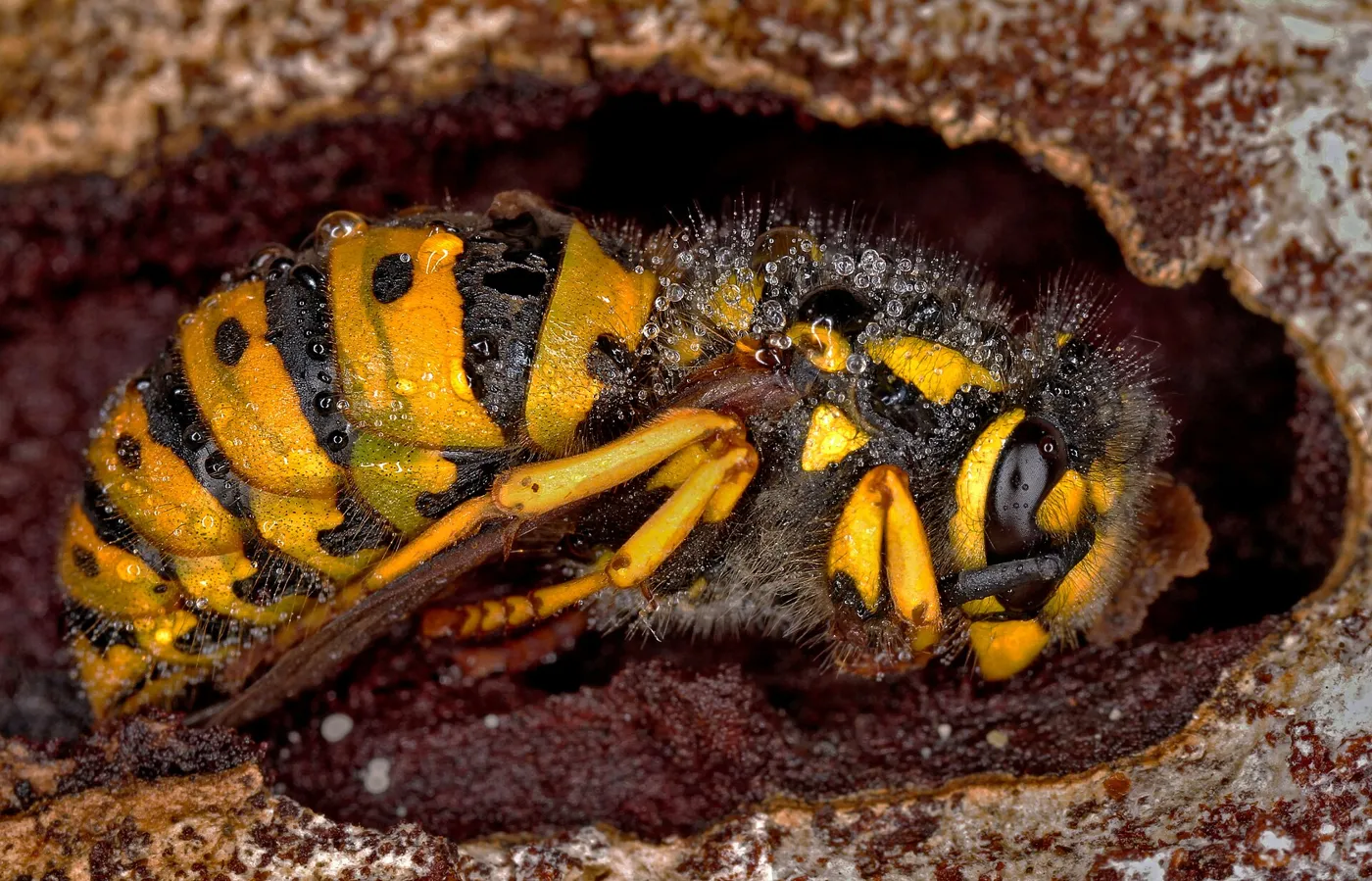
In Europe, winter kills all but the new queens. In Australia's milder climate a new queen may stay and keep laying, and over several seasons that can build giant nests of more than 100,000 wasps. So Melbourne gets the most wasps from late summer into autumn, just when people eat outside.
How European wasps got to Melbourne
The Australian Museum says it was first found in Tasmania in 1959, and by 1978 it was also known in Victoria. Better Health explains why it spread: it has no natural predators here, and it likes living near people for the food and drink.
Today it is a pest of fruit growers and beekeepers as well as households, and eWasp, a research and reporting scheme, collects nest reports to track where it spreads.
Finding a European wasp nest
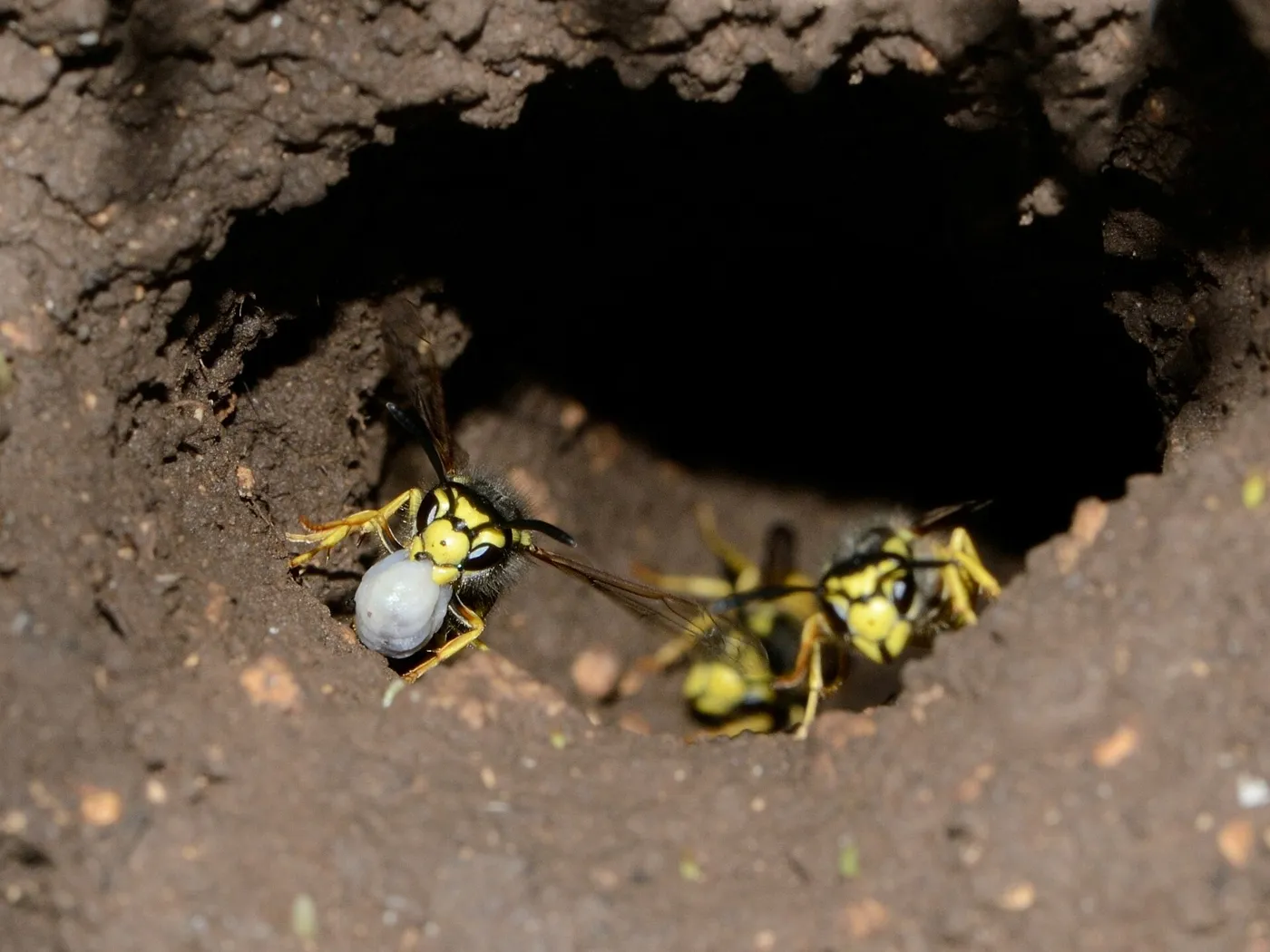
You rarely see the nest itself. The Australian Museum says it usually shows only as a small entrance hole, underground or in a cavity in a wall, ceiling, log or tree. Better Health adds retaining walls and tree hollows.
The meat trick
Better Health suggests a way to trace a nest, because it may not be on your property at all:
- Put a piece of meat in an open, visible spot outside.
- Watch a wasp take a piece. Once it has found the food, it flies almost in a straight line back to its nest.
- Move the bait in that direction and repeat until you see a wasp go into the nest.
European wasps can forage up to half a kilometre from the nest, so you may need your neighbours' help. Watch from a distance.
European wasp stings
Better Health lists burning pain, a raised lump, redness and swelling, and says a single sting seldom causes serious problems. ASCIA, the allergy specialists' body, calls swelling over 10cm a large local reaction, more common in children than adults.
First aid for a wasp sting
- Move away from the wasps.
- Wash the area with soap and water.
- Use a cold pack, wrapped in a cloth, to reduce swelling and pain.
- Use pain relief if needed; a pharmacist can suggest an antihistamine for itch.
- Watch for signs of a severe allergic reaction (below).
See a doctor straight away if
healthdirect lists a sting in the mouth, on the face, neck or eyelid, or in the eye; a child with 5 or more stings; and an adult with 10 or more.
Anaphylaxis is an emergency
Better Health warns that around one in 10 people who are stung two or more times become allergic and react more severely to later stings.
The Australian Museum records seven wasp sting deaths in Australia over twenty years, mainly allergy sufferers without their medicine. After a severe reaction, ask your doctor about desensitisation.
For advice at any hour, call the Victorian Poisons Information Centre on 13 11 26, or the healthdirect helpline (NURSE-ON-CALL in Victoria) on 1800 022 222.
How to keep European wasps away from your yard
These come from Better Health and healthdirect:
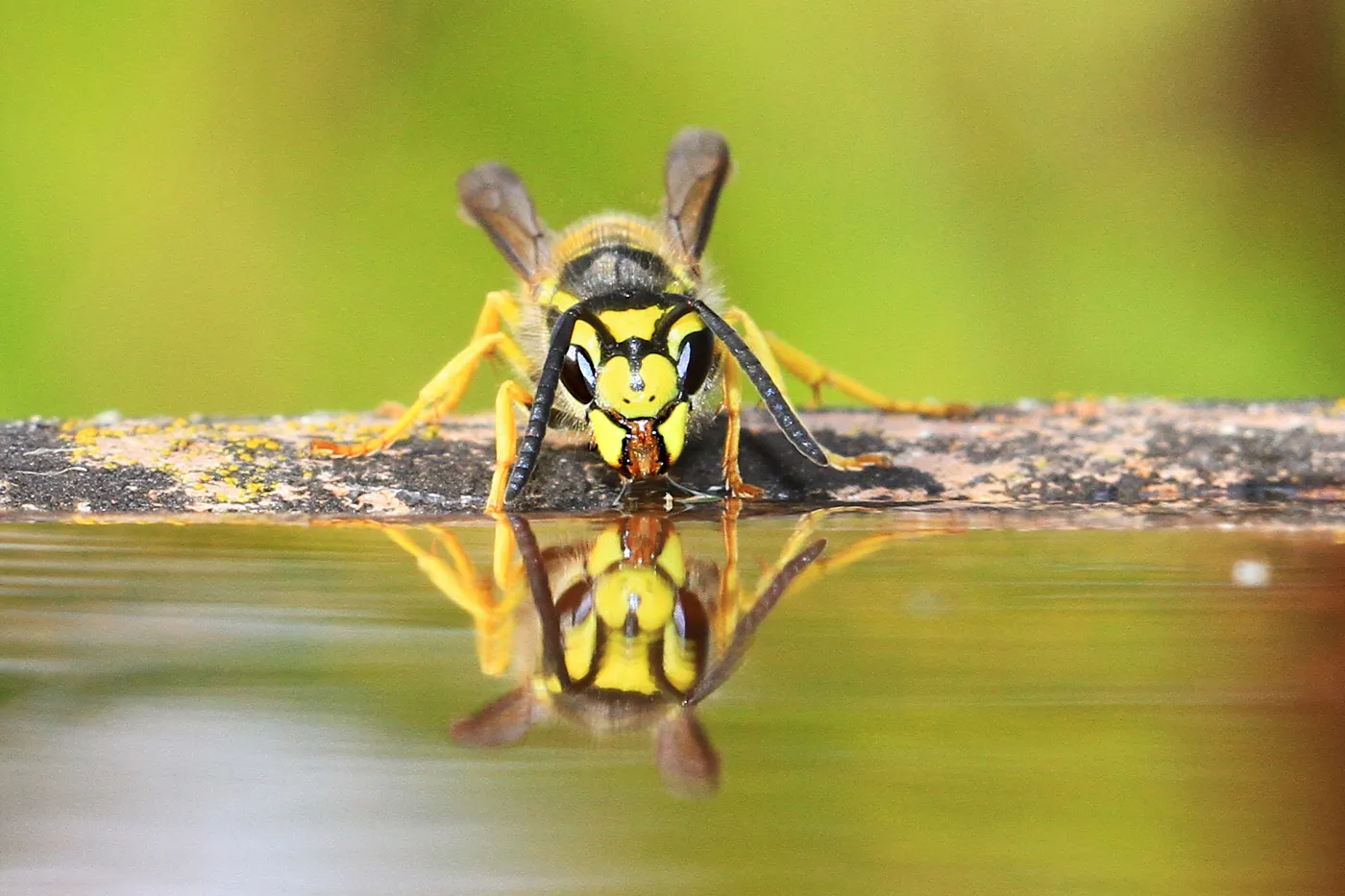
- Do not leave food, drink or pet food outside.
- Put tight-fitting lids on outdoor bins.
- Do not drink straight from a can or bottle outdoors, because a wasp can crawl inside. Use a clear cup or a straw.
- Wipe up sticky spills straight away.
- Cover food and drinks when eating outside.
- Wear shoes outdoors.
- If a European wasp lands near you, leave it alone. It will only attack if provoked.
- Have nests removed by professionals.
Lots of European wasps at your table means a nest is probably within half a kilometre, the distance Better Health says they forage.
Children, pets and European wasps
Children are stung most, because they eat outside, drop sticky food and poke at holes in the ground. healthdirect suggests teaching children where wasps live and to leave them alone.
Pet food is a magnet: Better Health lists pet food left outside among the things that draw European wasps in. Feed pets indoors in late summer and autumn, or lift the bowl as soon as they finish. A dog that snaps at wasps can be stung in the mouth, which healthdirect lists as a reason to see a doctor straight away.
A wasp swallowed from a can can sting inside the throat. Better Health says that needs urgent care, because swelling there can block the airway.
Getting a European wasp nest removed
A few things make the job go well:
- Find the entrance first, from a safe distance: a hole in the lawn, a gap in a retaining wall, a crack in brickwork or under the eaves.
- Check it is on your land. If it is next door, talk to your neighbour first.
- Use a licensed operator. Victoria licenses pest controllers through the Department of Health's Pest Control Program (1300 767 469).
- Tell them about allergies when you book.
- Keep everyone away, pets included, until the job is done.
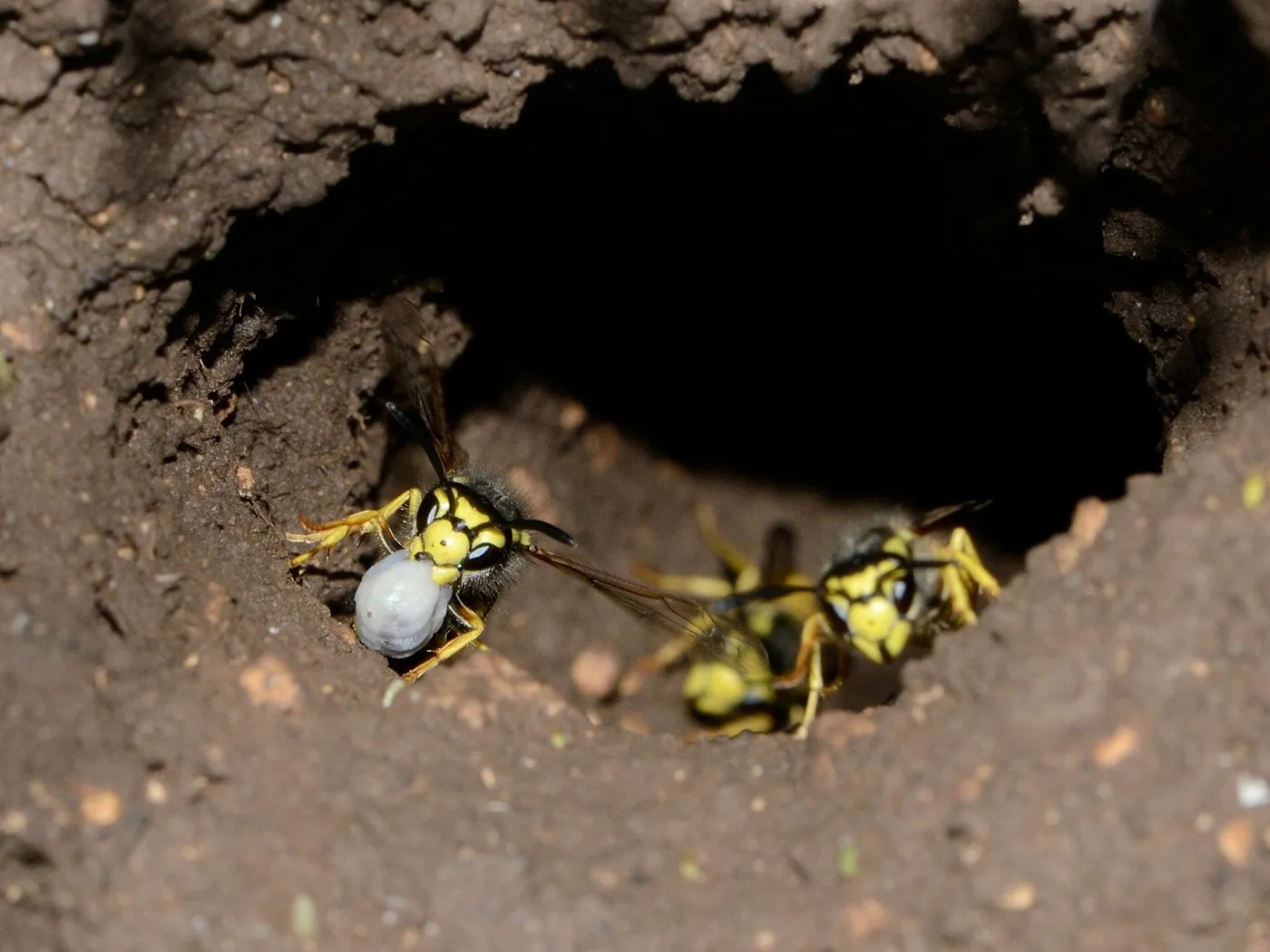
Do not block the hole or pour anything into it. The Australian Museum says the workers attack when their nest is disturbed.
Questions people ask
Are European wasps dangerous?
They are more dangerous than most insects in your yard because they defend their nest aggressively, sting repeatedly and call other wasps to attack. A single sting is painful but seldom serious, unless the person is allergic.
Do European wasps die after stinging?
No. Unlike honeybees, they keep their sting and can use it again.
Why are there so many wasps in autumn?
Nests reach their biggest size at the end of summer, when they also produce new queens and males.
Will a European wasp nest go away by itself?
Not reliably. In Australia's climate a nest can carry on through winter instead of dying off. Have it destroyed by a licensed pest manager.
Who do I call about a European wasp nest in Melbourne?
A licensed pest control operator. Better Health also suggests checking with your local council, and finding the nest first, because it may be on a neighbour's land.
This guide is general information, not a pest inspection. For a building, a sale or a treatment, get a licensed pest manager to look in person.
References
8 sources, each checked 2026-10-25
- Australian Museum, European wasp
- Australian Museum, Paper wasps
- Better Health Channel (Victorian Government), European wasp
- healthdirect, Bee and wasp stings
- Better Health Channel, Bites and stings first aid
- ASCIA, Large local reactions to insect stings or bites
- NSW Department of Primary Industries and Regional Development, European wasp
- eWasp, European wasp research and reporting