
What do termites look like? The workers you are most likely to see are small, soft and creamy white, with a straight body, no pinched waist and short, bead-like antennae. Soldiers have a larger, darker head with jaws. Winged swarmers are brown to black, with four wings of equal length.
Is it this?
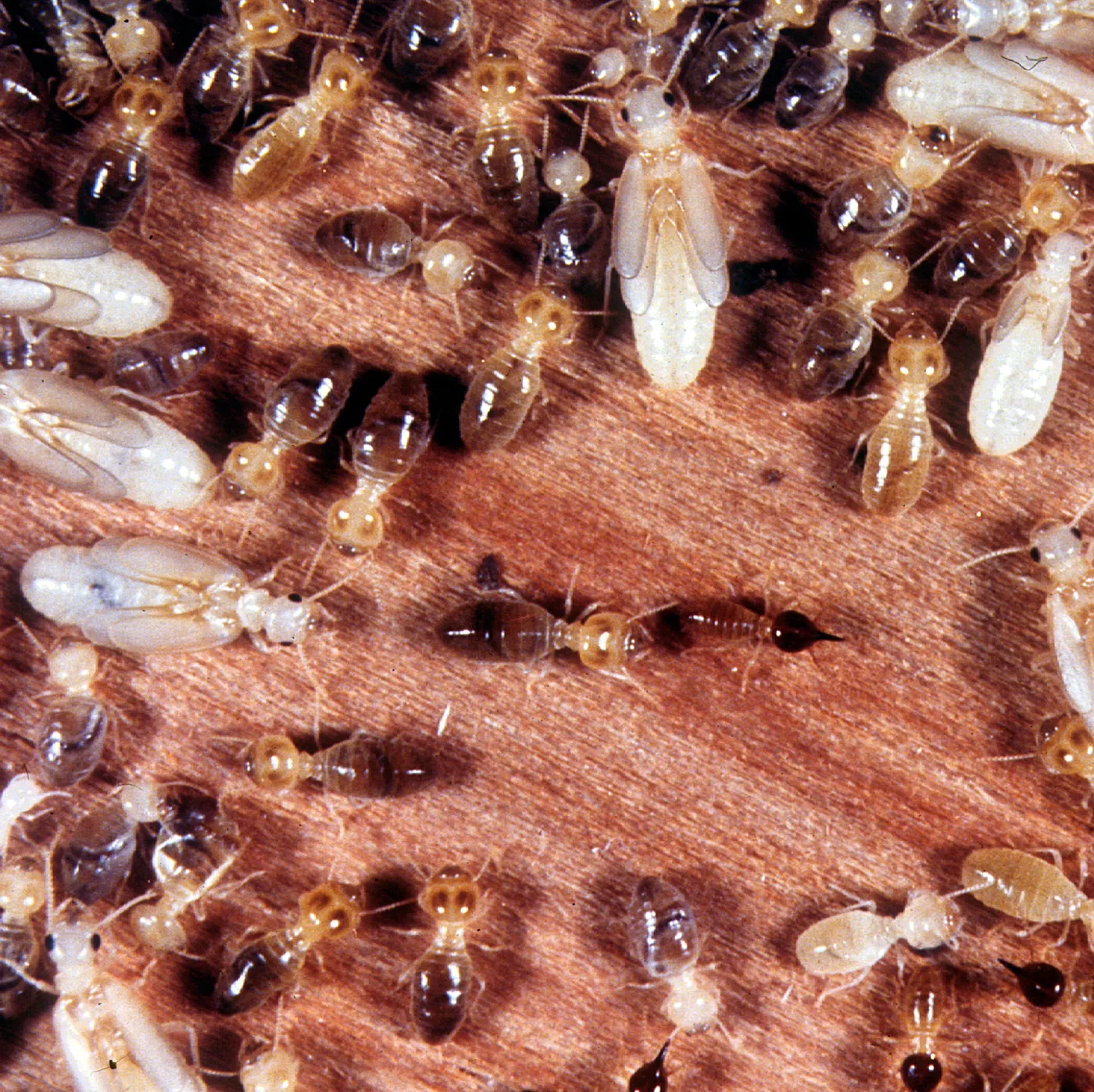
Termite (worker and soldier)
Isoptera
Small: termites run 4 to 15 mm
- Creamy white, soft, see-through look
- Thick waist, no pinch
- Straight, bead-like antennae
- Soldiers have a darker, larger head with jaws
Photo: Entomology, CSIRO, CC BY 3.0, via Wikimedia Commons.
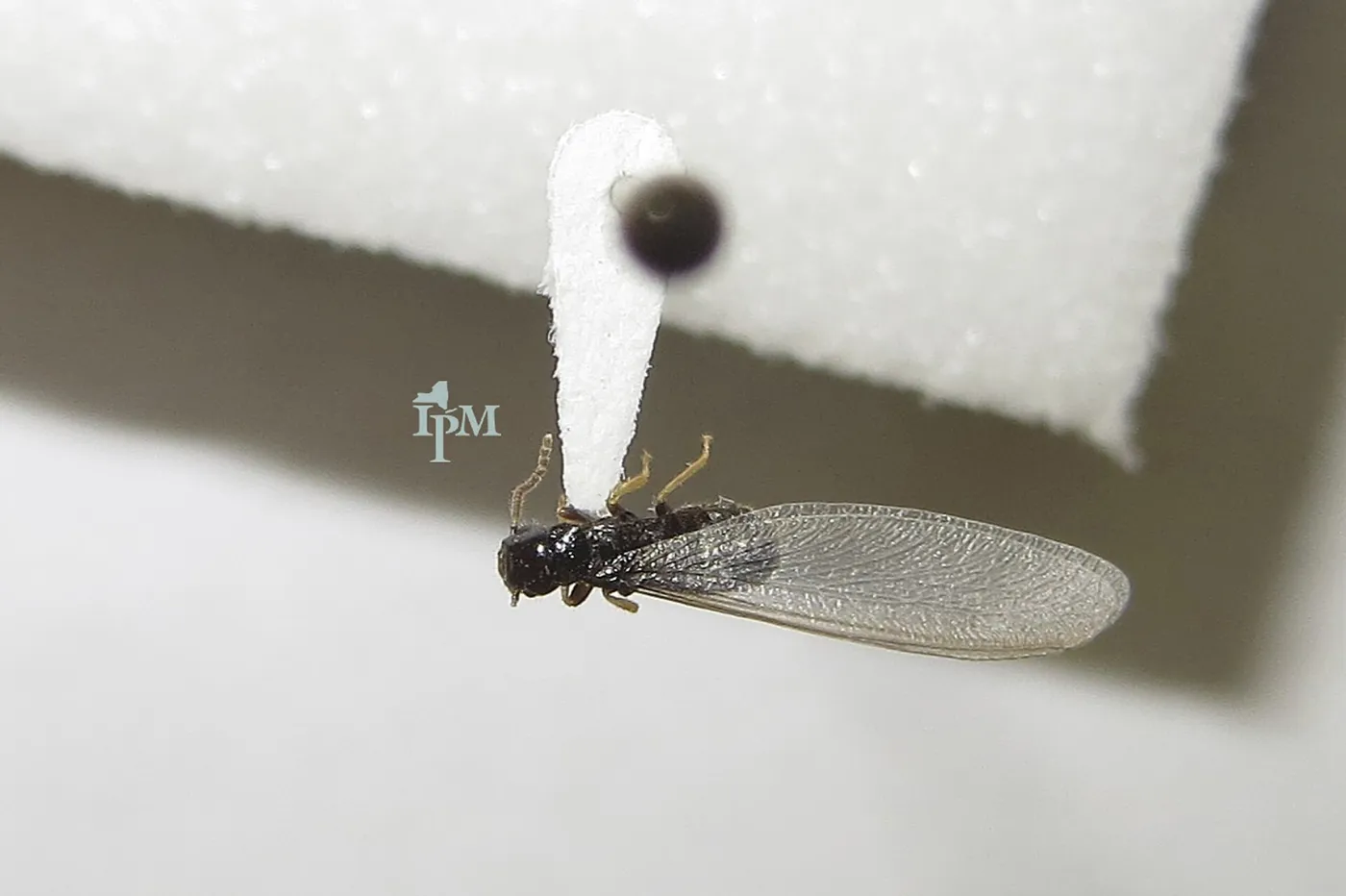
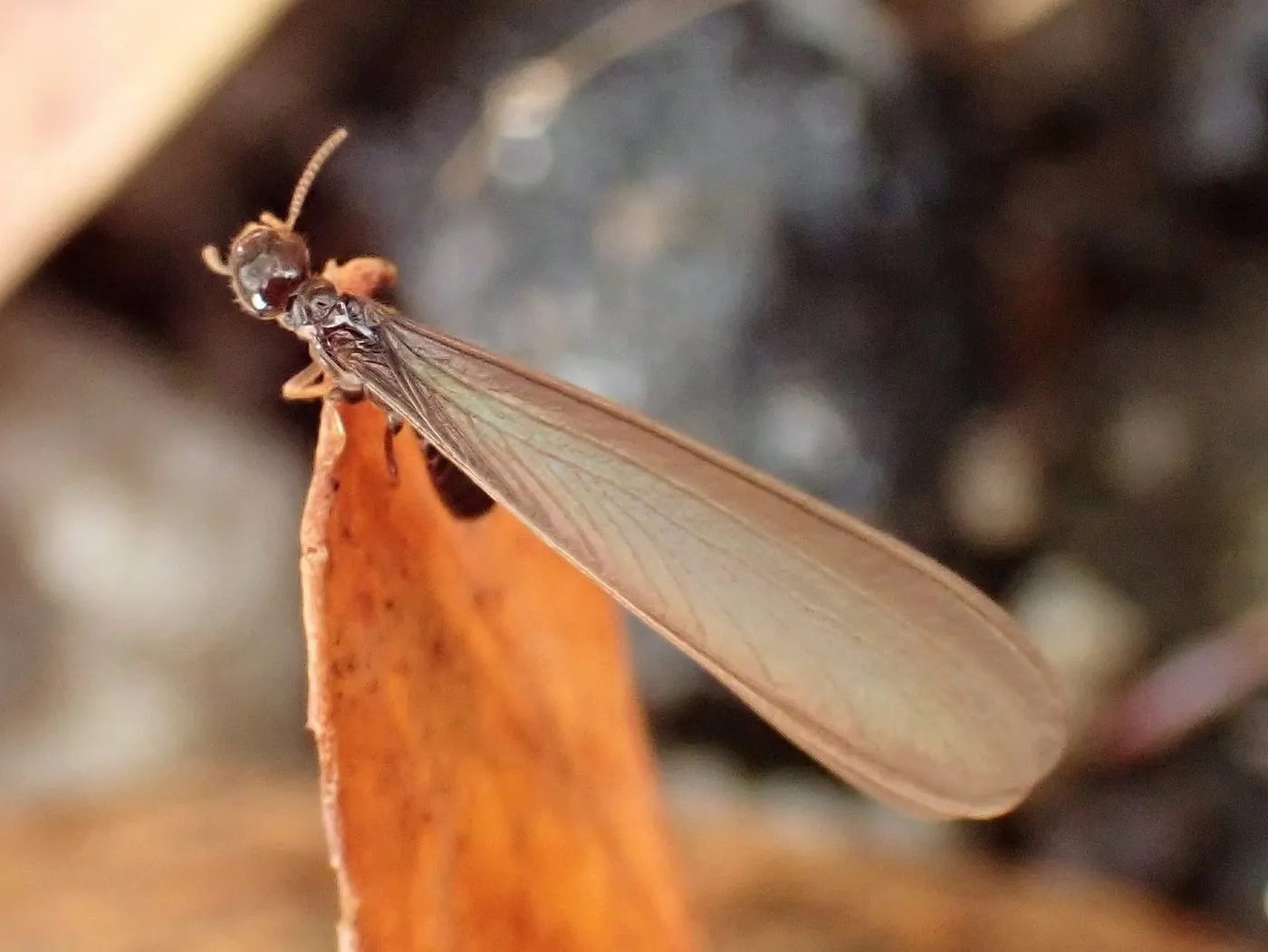
Winged termite (swarmer)
Isoptera, reproductive
Wings longer than the body
- Dark brown to black body
- Four wings, all the same length
- Wings snap off and pile up on sills
- Straight antennae
Photo: NY State IPM Program at Cornell University from New York, U, CC BY 2.0, via Wikimedia Commons.
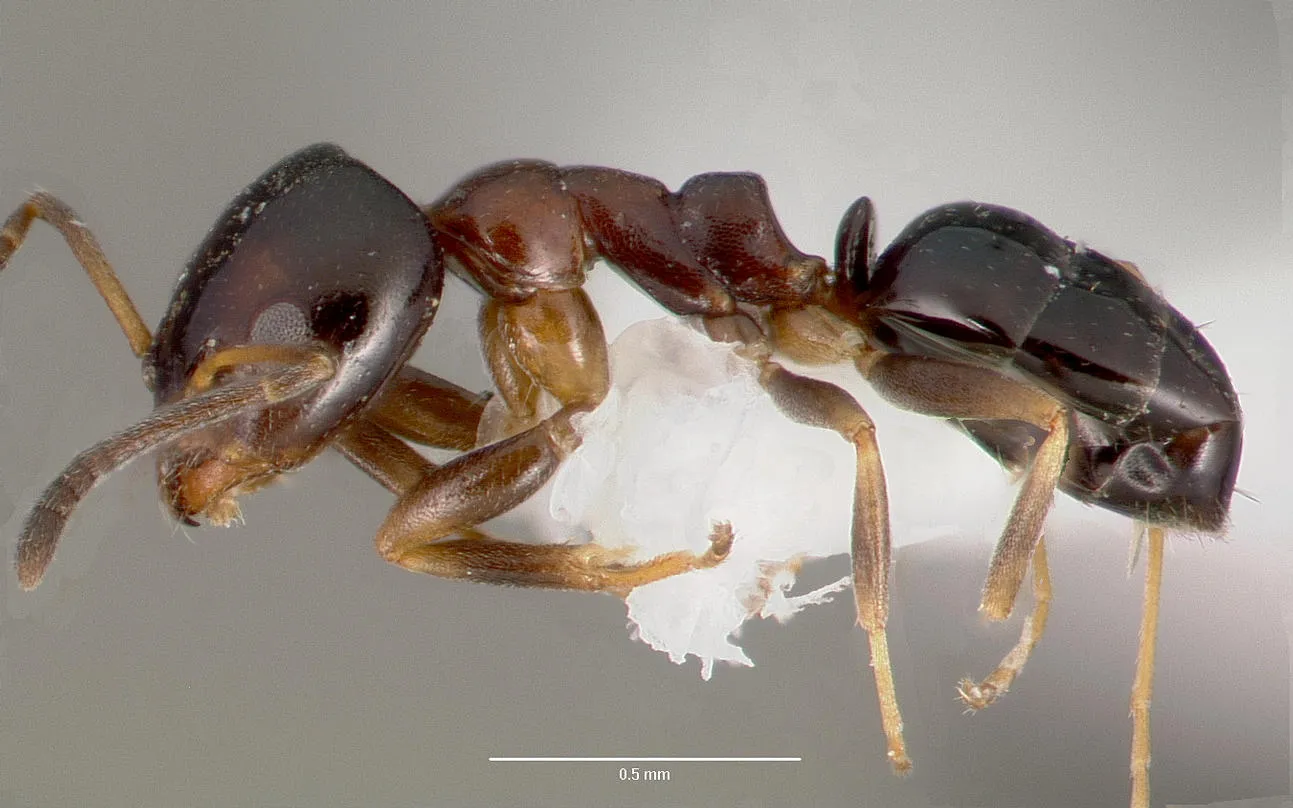
Black house ant (for comparison)
Ochetellus glaber
Size varies by ant species
- Hard, shiny, dark body
- Narrow, pinched waist
- Elbowed antennae
- Winged ants have a bigger front wing
Photo: AntWeb.org, CC BY 4.0, via Wikimedia Commons.
Termites look different depending on their job
A termite colony has castes, and each looks different. The Australian Museum lists the castes as the queen and king, workers, soldiers and the winged reproductives.
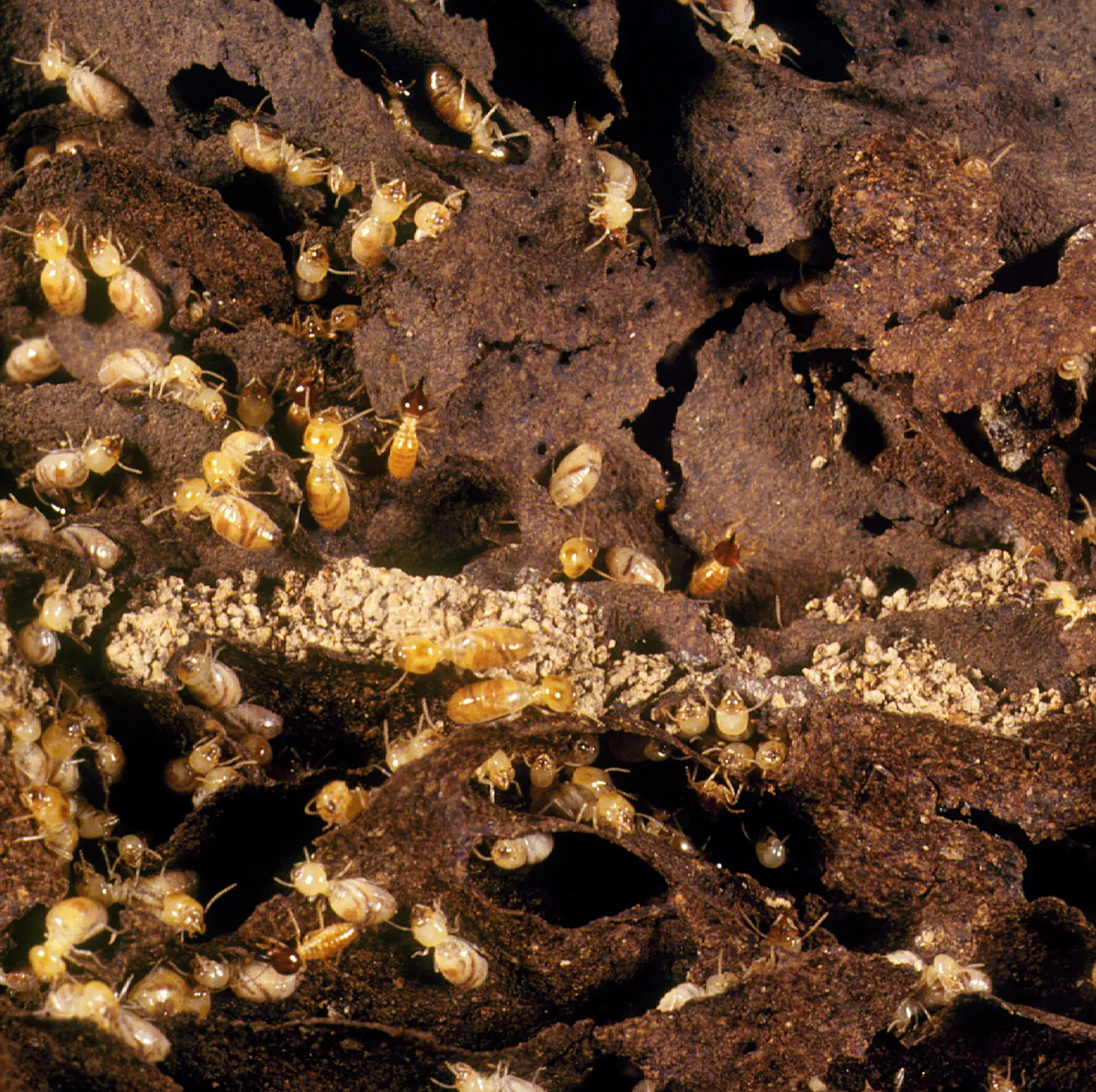
Worker
Pale, soft and blind; the ones in damaged timber
Soldier
Darker head, often with jaws
Winged swarmer
Dark body, four equal wings
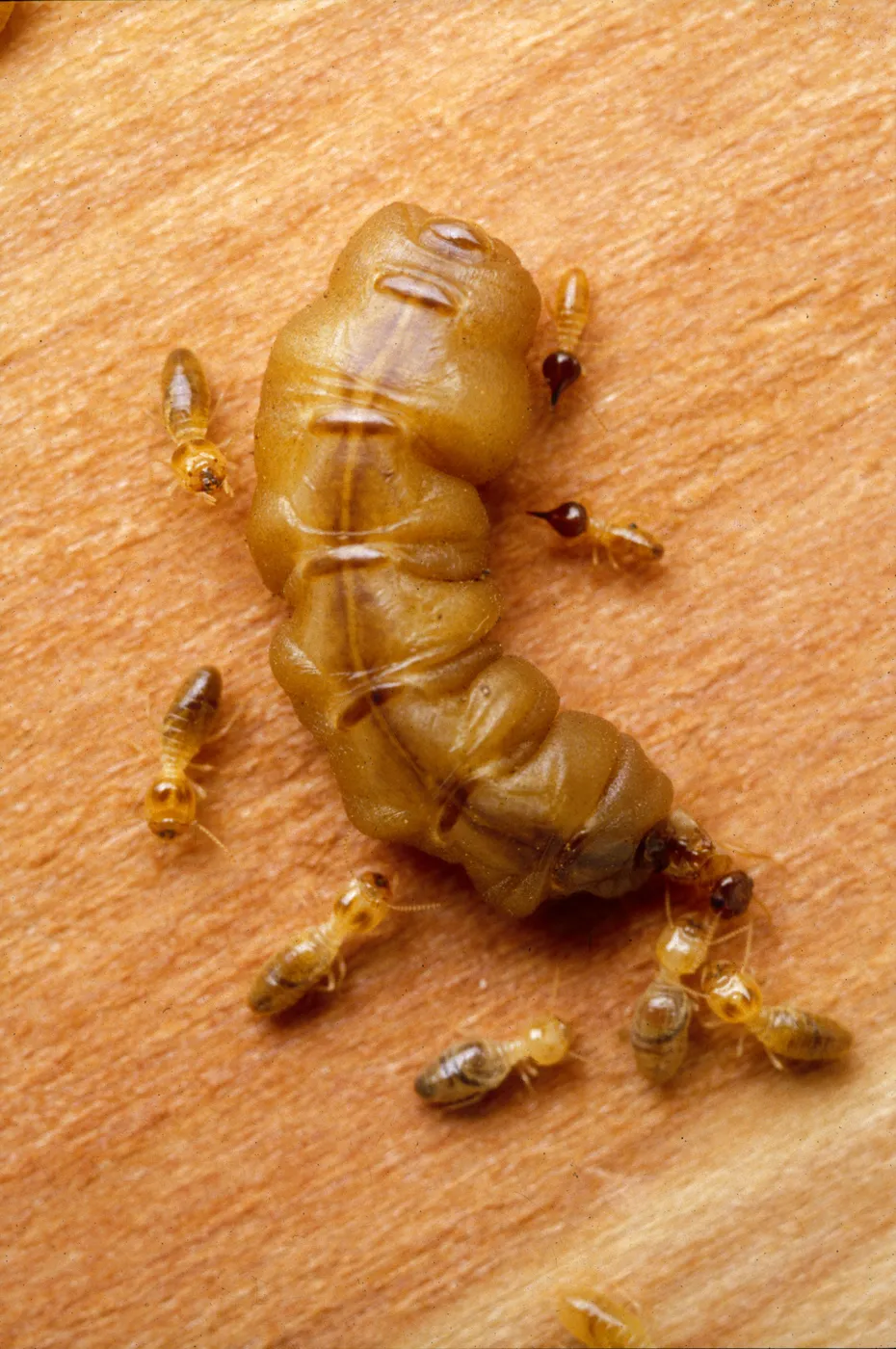
Queen
Swollen with eggs, deep in the nest
Worker termites
Worker termites are the ones you find when you break into damaged timber or a mud tube. They have white bodies and thin skin, they are blind, and they are the most numerous members of the colony.
They gather food, feed the young and the queen, and build and repair the nest. They rarely come out into the open, because they dry out quickly outside the humid nest.
Pest-Ex puts the average termite at 4 to 15 mm long, depending on the species.
Soldier termites
Soldiers defend the colony. The Australian Museum describes them as sometimes larger than workers but mostly the same size, with darker heads.
Some species have soldiers with strong jaws; others have a long, pointed snout. If you break a mud tube, the ones with orange or brown heads that rush to the gap are soldiers.
Winged termites (alates or swarmers)
The winged reproductives are the termites most people actually see. They have darker, tougher bodies, compound eyes and two pairs of wings that are the same size. After a short flight they drop their wings, pair up and look for a place to start a nest.
What you will notice: dark brown insects fluttering around lights on a warm, humid evening, then a scatter of shed wings on window sills, verandas and floors the next morning.
Queens and kings
You will almost never see these. The queen stays deep inside the nest, can grow large and swollen with eggs, and in some species lives and lays for up to 20 years.
Termites vs ants: the four tells
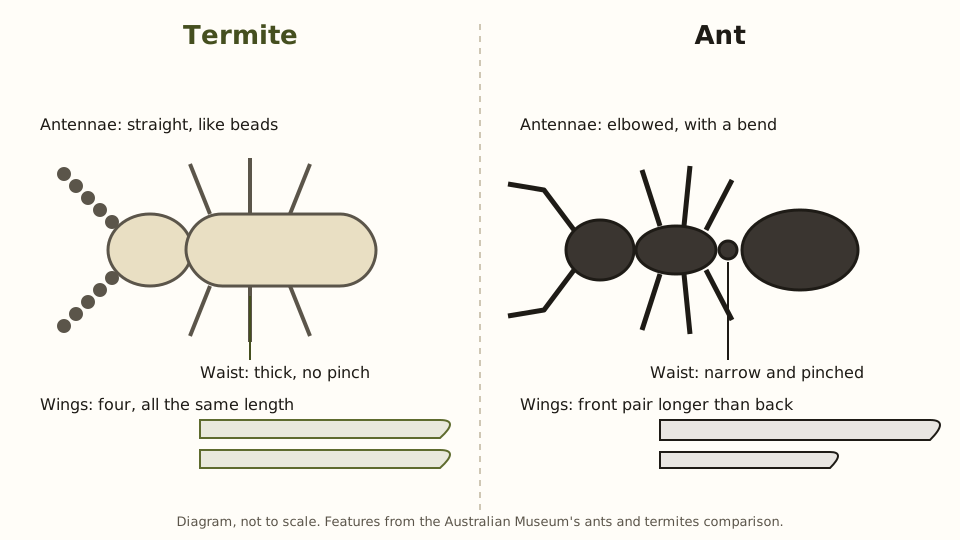
Winged ants in spring are the usual mix-up. The Australian Museum gives four features that separate them, and a phone camera shows all four.
| Feature | Termite | Ant |
|---|---|---|
| Waist | Thick, straight body with no pinch | Narrow, pinched waist |
| Antennae | Straight, like a string of beads | Elbowed, with a bend |
| Wings (swarmers) | Four wings all the same length | Front wings longer than the back wings |
| Body | Soft and pale (workers) | Hard and shiny |
Signs of termites in a Melbourne house
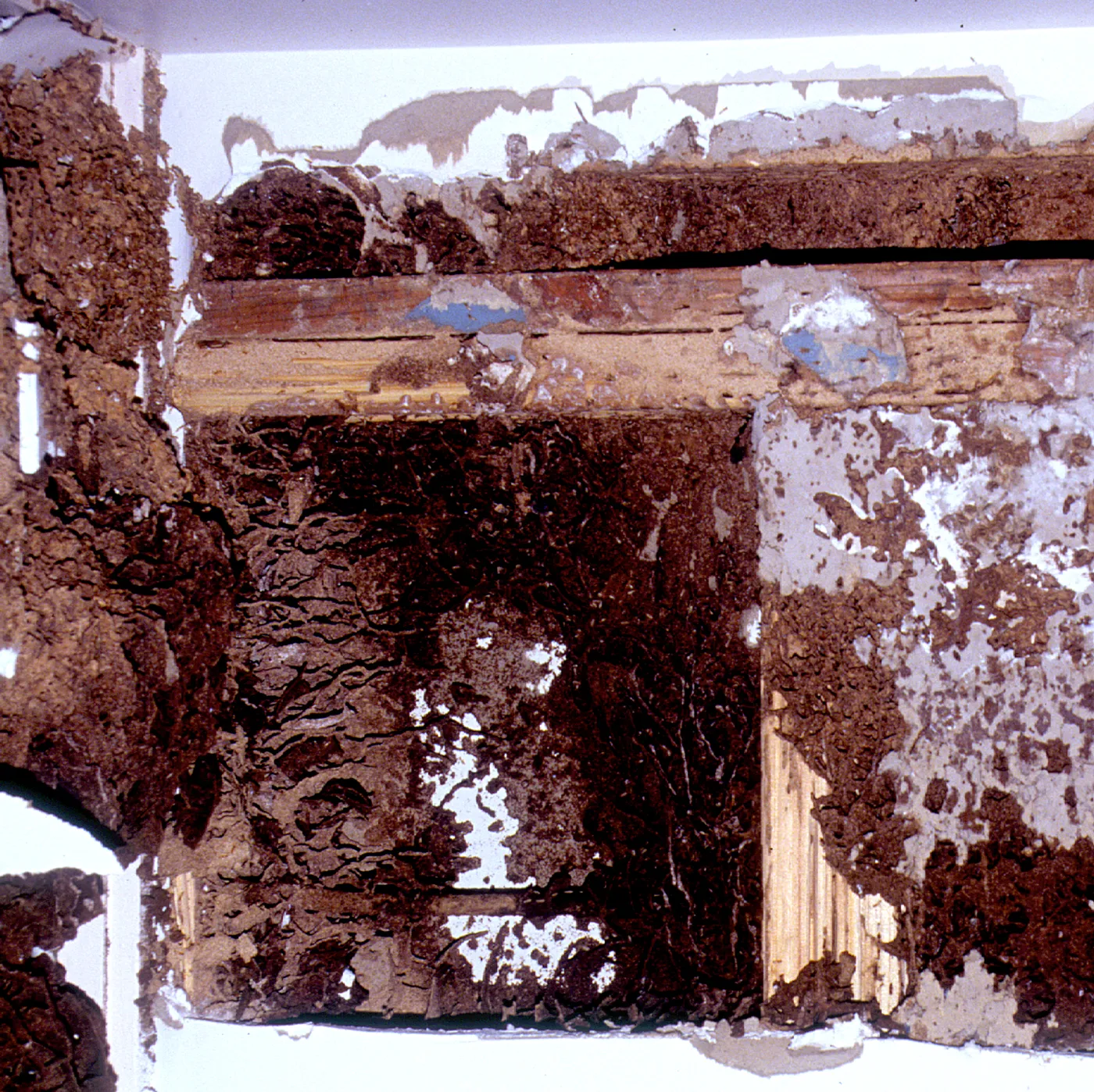
Most people never see a termite, only what it leaves behind. The Australian Museum explains why: workers rarely emerge from the nest or associated tunnels, because they dry out quickly outside it.
Mud tubes
Subterranean termites build mud tubes so they can travel between the soil and timber without drying out. Look on footings, brickwork, the subfloor, and around service pipes. A thin, earthy tube running up a brick pier is the classic sign, and the colony may be in a stump or tree next door.
Timber that sounds or feels hollow
Termites eat timber from the inside and leave a thin outer skin. Tap skirting boards and door frames with a screwdriver handle: sound timber thuds, eaten timber sounds hollow or papery.
A small pile of identical wings near a window or door after a warm, humid evening means a flight happened nearby, so a colony is close.
When termites swarm in Melbourne
When to expect them in Melbourne
Termites
Winged termites fly on warm, humid days, usually in spring and autumn; the colony keeps working out of sight all year. Source: Australian Museum, Termites.
peak around quiet · Months run January to December, Melbourne seasons.
The Australian Museum says colonising flights happen in warm, humid weather and usually take place in spring and autumn. In Melbourne that means still, sticky evenings, often around a storm.
The colony keeps working in winter. The Museum notes that healthy nests hold their own temperature, usually between 25 and 36°C, so damage can continue all year.
What to do if you find termites
- Leave the termites and the mud tubes alone, and put the timber back if you disturbed it.
- Take clear photos, including a close-up of one insect next to a ruler or coin.
- Book a licensed pest manager to do a full inspection, and keep up regular inspections afterwards.
- Ask the inspector what termite management system the house already has, and what it needs to stay effective.
- Tell your neighbours, because the colony may be on their side of the fence.
How termite treatment works
A pest manager may recommend a chemical treatment, a reticulation system or a baiting system. Pest-Ex notes that termite baiting is a common treatment for Coptotermes, which it describes as Australia's most destructive widespread termite.
Termite protection for new homes and renovations in Melbourne
Councils designate termite risk areas, and their termite pages carry the maps. The rule changed in 2026. Vale Pest Group's summary explains that up to 1 May 2026, regulation 151 limited termite protection to buildings in those designated areas, and the Building and Plumbing Amendment Regulations 2026 removed that limit.
So do not assume a house outside a designated area needs no termite management: ask your building surveyor early.
Where termite management is required, it follows the Australian Standard AS 3660.1, and a durable notice must be fixed on the building, usually in the meter box.
Victoria's termite rules at a glance
| Rule | What it says |
|---|---|
| Regulation 149 | A council that creates or changes an area must update its maps and tell the Building and Plumbing Commission within 7 days; maps can be inspected free at council offices |
| Regulation 150 | Lets a council designate areas where buildings are likely to be attacked by termites |
| Regulation 151 | Since 1 May 2026, only exempts detached sheds, garages and carports |
| AS 3660.1 | The Australian Standard termite management must follow |
Some councils cover their whole area. Maroondah City Council designated its whole municipality in 2005, and Mornington Peninsula Shire has designated the whole shire, including for extensions.
Keep termites away: a checklist
This checklist follows the advice in Victoria's building regulator's termite guide:
- Fix plumbing leaks, drainage problems and roof leaks promptly, because termites are attracted to damp.
- Do not build up garden beds or mulch against walls, which hides an entry point.
- Keep subfloor vents clear so the subfloor stays ventilated.
- Do not store cardboard, timber or other cellulose products under the house.
- Use metal stirrups for veranda posts and gateposts.
- Have the house inspected by a licensed pest manager regularly.
How much damage termites do
Pest-Ex, a pest control firm, warns that home insurance does not cover structural damage caused by termites, so check your own policy.
Pest-Ex says Australia has more than 300 termite species, but only a few cause serious damage to homes.
Questions people ask
Are white ants and termites the same thing?
Yes. White ants is an old Australian name for termites. The Australian Museum points out that termites belong to a completely different insect group from true ants.
Do termites bite people?
Termites are not a danger to people. Soldiers can nip if handled, but they are built to fight ants, not people.
This guide is general information, not a pest inspection. For a building, a sale or a treatment, get a licensed pest manager to look in person.
References
9 sources, each checked 2026-10-25
- Australian Museum, Termites
- Australian Museum, What are the differences between ants and termites?
- Building and Plumbing Commission (Victoria), Termites
- City of Melbourne, Termites
- CSIRO Science Image, Working termites and termite damage photos
- US EPA, Termites: how to identify and control them
- Vale Pest Group, Termite protection requirements Victoria 2026
- Pest-Ex, Australian termites identification
- APVMA, product register (PubCRIS)
